
Shipping & Import
Backhoe Loader Import Checklist: Specifications, Documents and Order Evidence
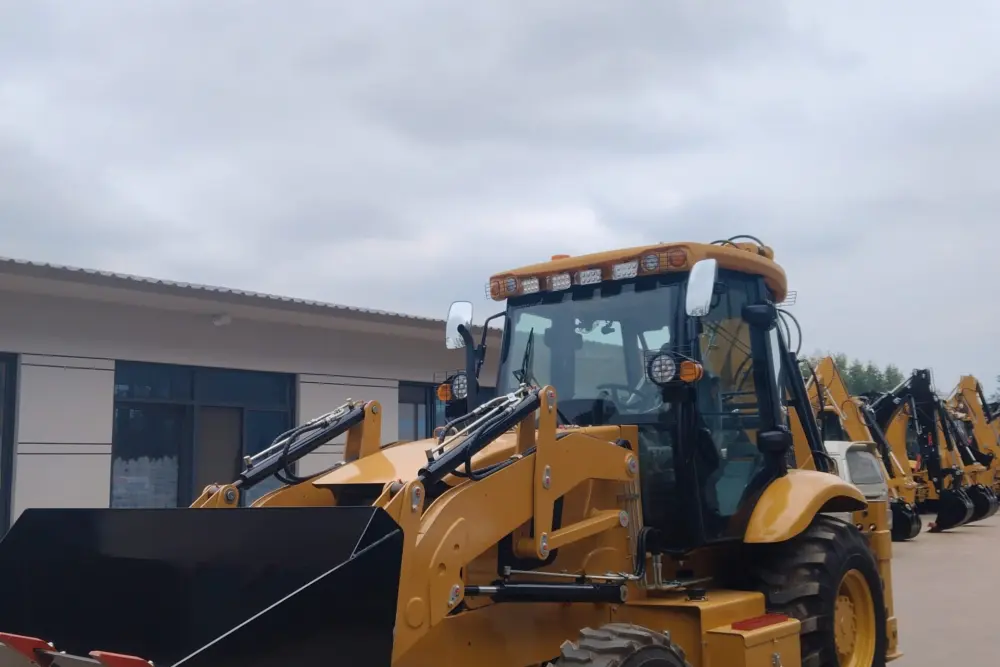
Importing a backhoe loader requires more than agreeing on a model name and purchase price. The buyer must connect the machine specification, supplier identity, configuration, packing, documents, inspection evidence and commercial terms to one order. If those pieces are handled separately, a technically suitable machine can still become a difficult shipment.
This checklist is written for buyers comparing the Ray Bridge RB420F, RB388 Standard and RB388 Luxury. It does not promise a universal certificate, warranty period, lead time, shipping method or parts arrangement. Those items vary and must be confirmed in the quotation or sales agreement.
1. Define the Job Before Requesting a Price
Provide measurable work requirements: maximum digging depth, trench width, loader material, required dumping height, access dimensions and transport limits. A supplier cannot make a defensible recommendation from “general construction” alone.
Include the destination country and expected port, but do not assume that naming a destination automatically confirms compliance or documentation. List the specific certificates and import documents your broker or authority requires.
2. Match the Public Model to the Supplier Reference
Brand model names can differ from supplier factory references. The order should show both where relevant, so inspection photos, engine plates and documents can be matched to the same machine. For Ray Bridge, the current public names are RB420F, RB388 Standard and RB388 Luxury.
Avoid accepting an invoice that says only “backhoe loader.” The exact model should appear consistently in the quotation, specification attachment, packing list and other agreed records.
3. Attach the Final Technical Specification
The specification should be versioned and attributable. For the RB420F, confirmed headline values include 7,500 kg operating weight, 1.5 m³ loader bucket, 2,800 kg rated load and 4,100 mm standard maximum digging depth. The RB388 Standard lists 8,500 kg, 1.5 m³, 2,800 kg and 4,100 mm respectively. The RB388 Luxury lists 9,300 kg, 1.2 m³, 2,500 kg and 3,820 ± 20 mm.
Do not combine the best values from several sources. If a newer supplier document changes a figure, keep the evidence and record which version controls the order.
Handle conflicts as TBD
The RB388 Standard engine and rated power remain TBD because its supplied source contains conflicting entries. The correct action is to request a final engine specification, not to select the value that looks most marketable.
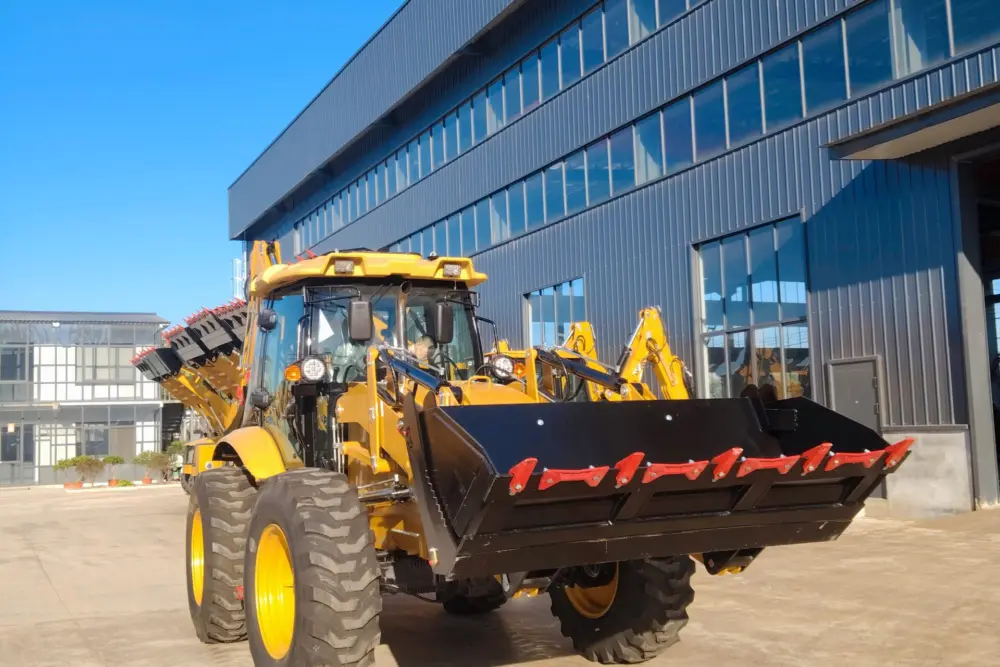
4. Separate Standard Equipment from Options
Ask for a line-by-line configuration. The RB420F lists a 5,000 mm optional telescopic-arm digging depth, while the RB388 Standard lists 5,300 mm. These figures are not part of the standard 4,100 mm depth unless the optional arm is ordered.
The same discipline applies to buckets, couplers, tyres, cab equipment, controls and electrical details. A photograph can show an option, but the written configuration determines what is included.
5. Confirm Dimensions for Transport and Access
Published operating dimensions provide an initial check. RB420F is listed at 7,600 × 2,360 × 2,890 mm; RB388 Standard at 7,600 × 2,380 × 2,890 mm. RB388 Luxury lists total length 6,400 ± 80 mm, overall width 2,450 ± 20 mm and cab height 3,250 ± 10 mm.
Shipping dimensions may differ if equipment is folded, removed or packed separately. Request the final packing dimensions, weight and lifting or unloading information for the quoted configuration. Use them with the carrier and customs broker.
6. Identify the Required Import Documents
Document requirements differ by destination, transaction and trade term. Do not rely on a generic statement that “all export documents” are included. Create a list with your broker and ask the seller to mark each item available, not applicable or pending.
- Commercial invoice
- Packing list
- Transport document
- Certificate of origin if required
- Product certificate or conformity evidence required by the destination
- Engine or emissions evidence if applicable
- Inspection report or third-party inspection record if agreed
- Operation and maintenance documentation required by the contract
This list is not a promise that every document exists for every model. It is a method for resolving requirements before shipment.
7. Define the Inspection Evidence
There is no evidence in the current knowledge base for one universal Ray Bridge eight-stage inspection programme. Therefore, request the inspection package needed for the specific order. It may include model identification, serial or engine-plate photos, configuration checks, function evidence, condition photos and loading records, but only agreed items should be treated as commitments.
If third-party inspection is required, state who appoints the inspector, what standard is used, which party pays and what happens if a non-conformity is found.
8. Put Warranty and Support Terms in Writing
Do not accept “standard warranty” without the standard. The agreement should state the duration, starting point, covered components, exclusions, required maintenance evidence and claim procedure. It should also state responsibility for parts, labour, freight, remote diagnosis and any site attendance.
The current evidence does not support one warranty or support promise for all Ray Bridge models. The signed commercial document is therefore the authoritative source for the order.
9. Plan Spare Parts by Exact Model
Ask for a model-specific parts list, identifiers, price, current availability and estimated lead times. If an initial spare-parts package is required, list every included item. Do not assume that long-term availability is guaranteed simply because a machine is offered for sale.
Keep model and serial information with later enquiries. Visual similarity is not a reliable method for identifying hydraulic, electrical or engine parts.
10. Clarify Price, Delivery and Responsibility
A complete quotation should state currency, validity, payment milestones, trade term, named place or port, packing, inland movement, freight responsibility and estimated schedule. Production and shipping time can change, so use dated written terms rather than an undated website statement.
Check who handles insurance, customs clearance, destination charges, unloading and local registration. These commercial questions are separate from the machine’s technical suitability.
11. Review Product Images Correctly
Use images to confirm visible identity and configuration, not to create specifications. Compare the quoted model with its controlled gallery and ask about any visible difference in buckets, cab, tyres, decals or attachments. A gallery may include more than one angle and optional items.
For this reason, Ray Bridge maintains model-specific product galleries. The final pre-shipment evidence should still identify the actual quoted or completed unit if that has been agreed.
12. Use a Three-Column Approval Sheet
Create a simple table with Requirement, Supplier Response and Evidence. Record each item as confirmed, not applicable or TBD. The order should not move forward while a safety, compliance or essential performance item remains ambiguous.
Examples include engine model, digging arm, bucket width, electrical details, certificate applicability, packing dimensions and warranty coverage. The process is deliberately plain: it makes gaps visible to purchasing, technical and logistics teams.
Model-Specific Points to Recheck
RB420F
Confirm the 76 kW Yunnei diesel engine, 7,500 kg operating weight, 1.5 m³ loader bucket, 2,800 kg rated load, 4,100 mm standard depth and whether the 5,000 mm optional telescopic arm is included.
RB388 Standard
Confirm the 8,500 kg operating weight, 1.5 m³ loader bucket, 2,800 kg rated load and selected arm. Resolve engine and rated power with a non-conflicting final document.
RB388 Luxury
Confirm the YCD4J22T-115 engine, 85 kW power, 9,300 kg operating weight, 1.2 m³ loader bucket, 2,500 kg rated load, dimensional tolerances and 3,820 ± 20 mm digging depth.
Before You Approve the Order
Read the quotation and every attachment as one package. Check that the model, specification, options, images, price, evidence, documents and responsibilities agree. Keep a copy of the approved version and record later changes rather than replacing the original.
Visit the Ray Bridge backhoe loader range to compare the current public data, then use the supplier and order verification page as a pre-purchase evidence checklist.
Keep a Controlled Order File
Store the approved quotation, technical specification, option list, supplier identity, inspection evidence and shipping documents together. Give revised files dates or version numbers instead of overwriting the earlier copy. If an engine, attachment or document changes, record who approved the change and which price or schedule was affected.
This record supports later parts enquiries and prevents a marketing page from becoming the only description of the purchased machine. The signed agreement remains authoritative for commercial and support obligations.
Final Approval Check
Before payment, confirm that technical, purchasing and logistics reviewers are using the same dated quotation and attachments. Resolve every essential TBD item and keep the approved version unchanged in the order file.
Frequently Asked Questions
What documents are needed to import a backhoe loader?
Requirements vary by destination and transaction. Ask your customs broker or authority for the required list, then have the seller confirm availability and applicability in writing.
How should I verify a backhoe loader supplier?
Request the legal supplier identity, manufacturing relationship, bank and contract details, model-specific specification and evidence connected to the quoted machine. Independent checks may also be appropriate.
Should shipping dimensions be in the quotation?
Yes when they affect freight or unloading. Confirm final packed dimensions and weight because they may differ from operating dimensions.
Is a product photo enough to confirm an attachment?
No. A photo is visual evidence only. The attachment name, compatibility, quantity and price should appear in the written configuration.
What warranty should an imported backhoe loader include?
There is no universal answer. Confirm the period, coverage, exclusions, claim evidence and responsibility for parts, labour and freight in the agreement.
What should remain TBD?
Any value or promise that lacks reliable evidence should remain TBD until resolved. Do not fill gaps with a similar model’s specification or a competitor’s information.