Construction Machinery · Export B2B

Product Line · 3 Models

Backhoe Loaders for Digging, Loading & Multi-Purpose Operation

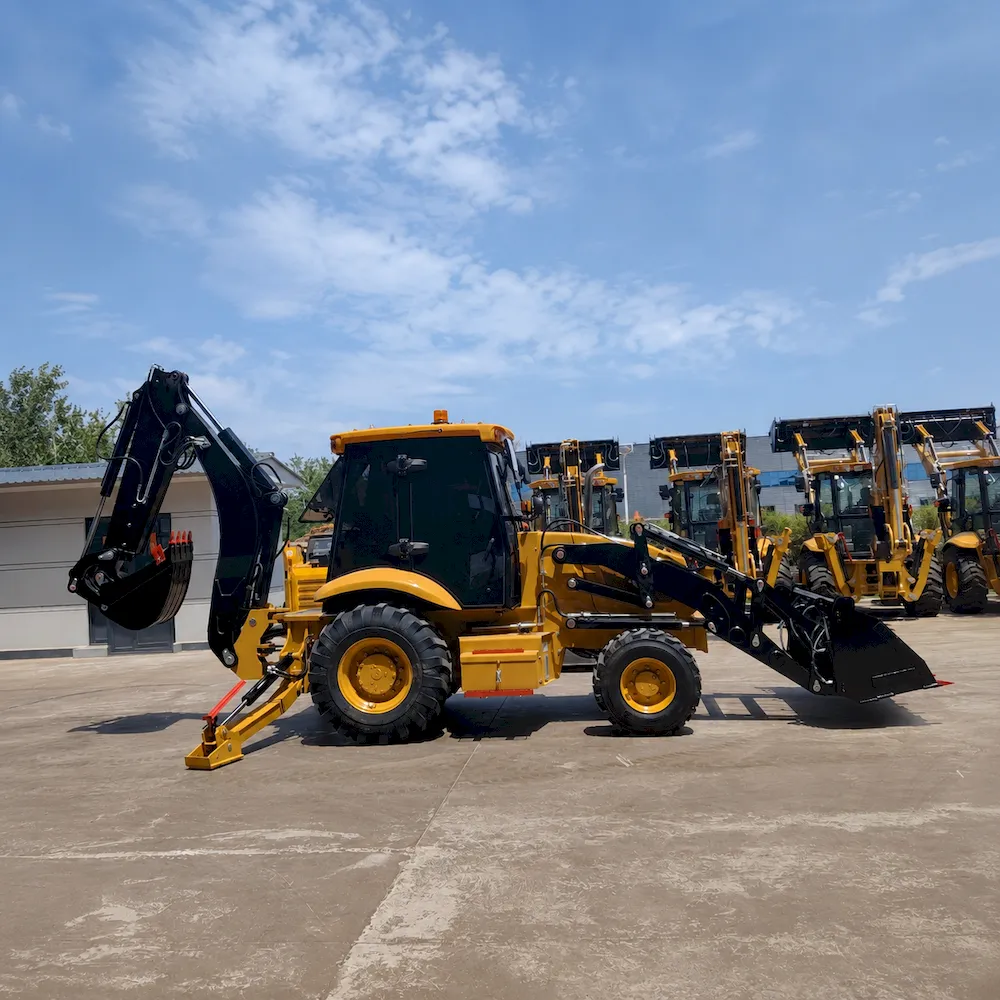
A backhoe loader digs, trenches, loads and backfills with one machine and one operator — an alternative to running a separate excavator and wheel loader on small and mid-size sites. Three models, configurable buckets and cabs, export documentation and long-term parts support.

Backhoe Loaders for Digging, Loading & Multi-Purpose Operation
One Machine Where You Would Otherwise Run Two

Why a Backhoe Loader

One Machine Where You Would Otherwise Run Two

On a typical small or mid-size site, the digging work and the material-handling work rarely happen at the same time. A backhoe loader covers both with a loader bucket at the front and a hoe attachment at the back — so the crew that dug the trench in the morning loads aggregate in the afternoon.

Who buys them: general contractors running compact sites, municipal crews doing utility and sidewalk work, rental fleets that need one machine to rent as many ways as possible, and farms building access roads, drainage and livestock infrastructure.

  • Digs and loads with one machine and one operator
  • Travels between work points under its own power
  • Works in operating envelopes where an excavator plus a loader would crowd each other
  • One fuel bill, one maintenance schedule and one transport move instead of two
  • Configurable buckets and cabs matched to your market and tasks confirmed in the quotation

The Line-Up

Three Backhoe Loader Models

Key figures are being verified with the factory and published as confirmed. Ask our team for the latest specification sheet for the model you are weighing.

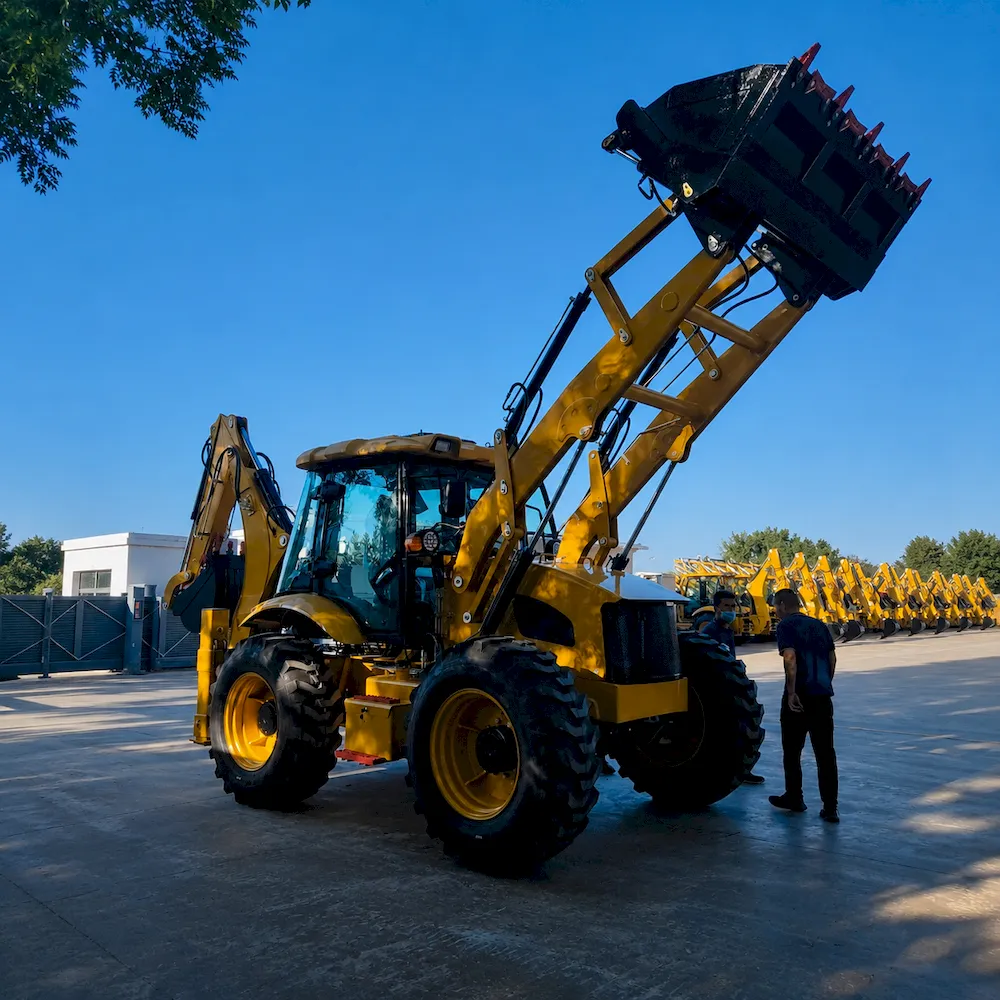
Backhoe Loader RB420F Backhoe Loader

Backhoe Loader

RB420F Backhoe Loader

7,500 kgOperating weight
2,800 kgRated load
4,100 mmMax. digging depth

A 4WD backhoe loader with a 1.5 m³ loader bucket, 2,800 kg rated load and 4,100 mm standard maximum digging depth.

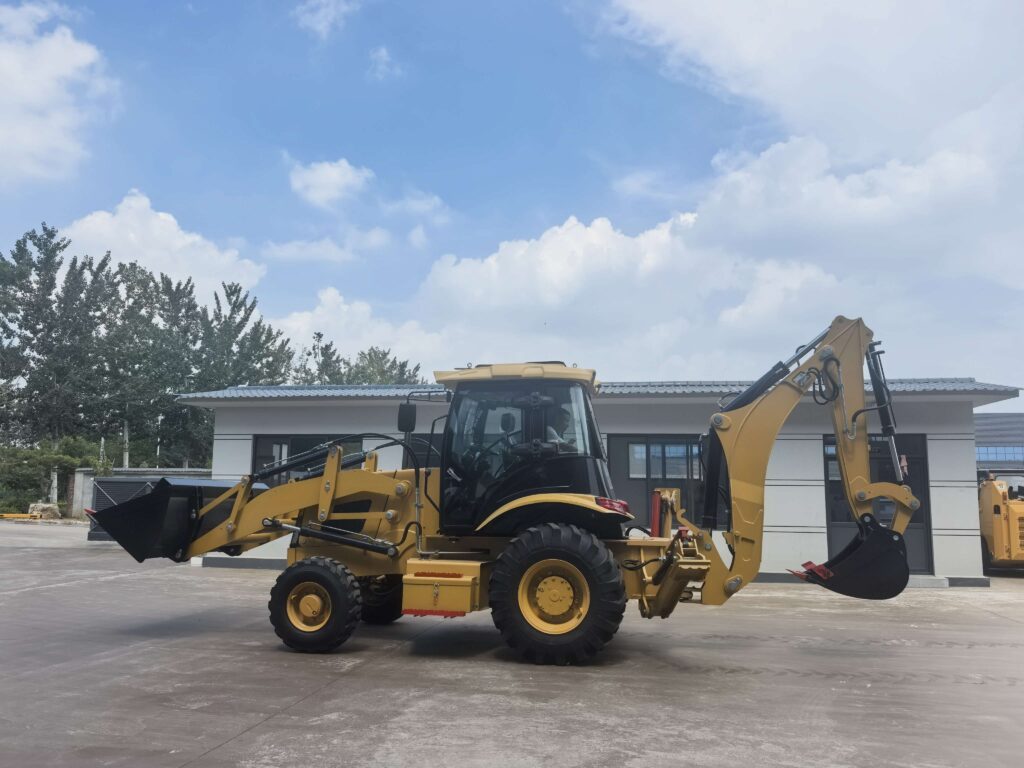
Backhoe Loader RB388 Standard Backhoe Loader

Backhoe Loader

RB388 Standard Backhoe Loader

8,500 kgOperating weight
2,800 kgRated load
4,100 mmMax. digging depth

A 4WD backhoe loader with an 8,500 kg operating weight, 1.5 m³ loader bucket and 4,100 mm standard maximum digging depth.

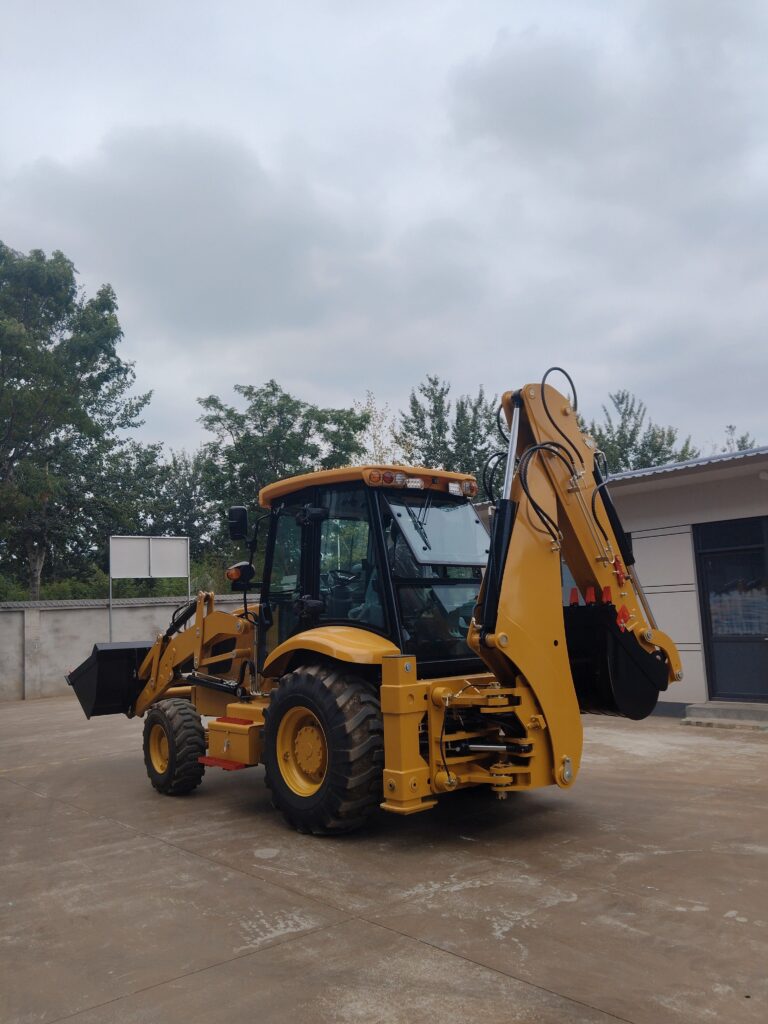
Backhoe Loader RB388 Luxury Backhoe Loader

Backhoe Loader

RB388 Luxury Backhoe Loader

9,300 kgOperating weight
85 kWRated power
3,820 mmMax. digging depth

A 9,300 kg 4WD backhoe loader with a 1.2 m³ loader bucket, 2,500 kg rated load and 3,820 mm maximum digging depth.

Side by Side

What the Machine Is Made Of

The systems that decide performance, comfort and long-term running cost. Detailed per-model specifications are confirmed with the factory at the order stage.

Backhoe Loaders Model Comparison
Specification RB420F7,500 kg · Multi-purpose RB388 StandardCost-effective configuration RB388 LuxuryUpgraded cab & comfort
Operating Weight 7,500 kg 9,300 kg 8,000 kg
Engine Power 76 kW 85 kW 91 kW
Rated Load 2,800 kg 2,800 kg
Loader Bucket Capacity 1.5 m³ 1.2 m³ 1.7 m³
Backhoe Bucket Capacity 0.3 m³ 0.3 m³
Maximum Digging Depth 4,100 mm 3,820 mm 4,100 mm
Dumping Height 2,700 mm 2,700 mm
Drive Type 4WD 4WD 4WD / four-wheel steering

Swipe to see all models →

Model Selection Guide

Four Steps from Task to Order

Define the tasks

List what the machine must actually do this year: trench depths, pit volumes, loading rates, attachment changes. The task list, not the brochure, picks the model.

Check dimensions & weights

Compare machine dimensions and operating weight against your transport trailers, site access routes and any weight-limited bridges or ramps confirmed in the quotation.

Choose the configuration

Buckets, cab level and drive options are selected per market and per task. We confirm what each configuration includes in writing before production.

Confirm the shipping plan

Container or break-bulk, packing standard, documents and freight to your port — confirmed with the quotation so the landed cost is clear before you order.

Two Working Ends, One Operator

How It Works

Two Working Ends, One Operator

The loader end

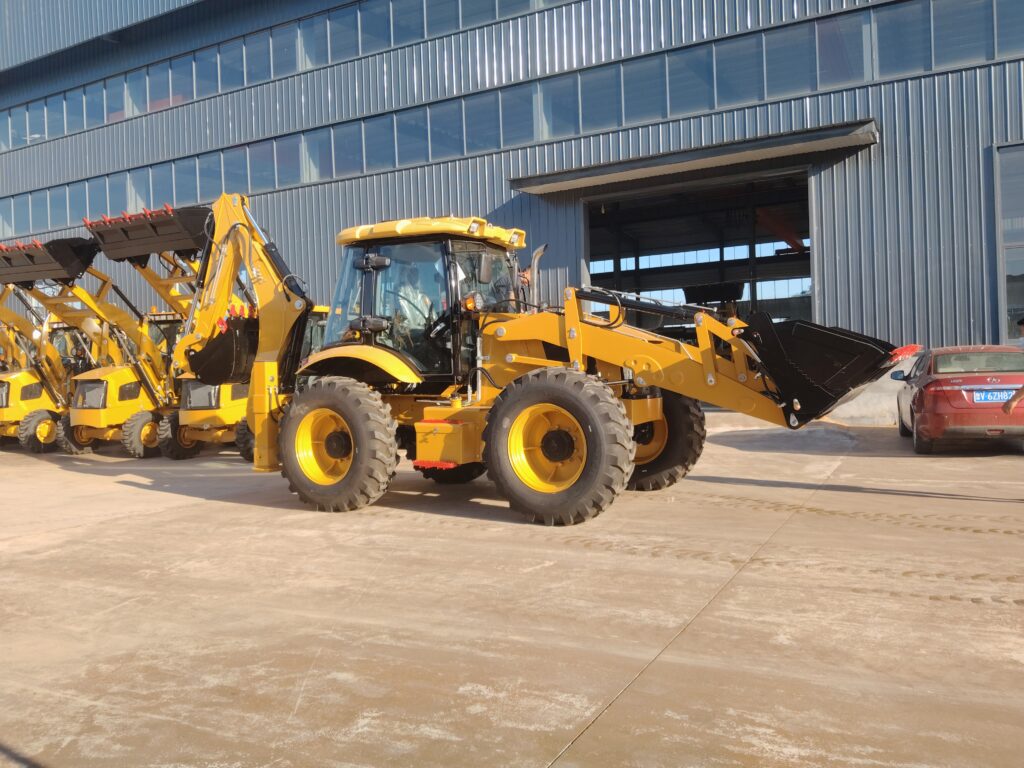
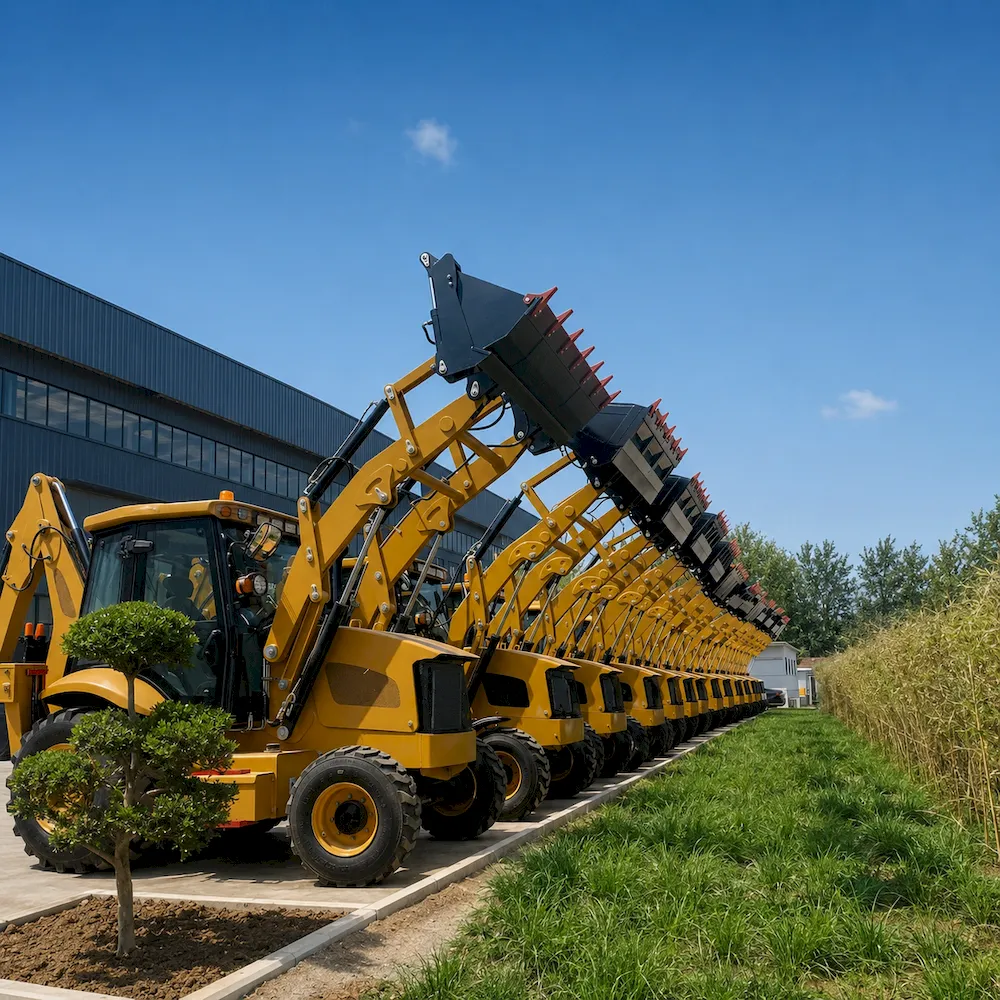
At the front, the loader bucket handles material: it loads trucks, moves aggregate around the plot, levels spoil and backfills around foundations. The operator works from the forward-facing seat, and the machine shuttles between stockpile and trench under its own power.

The backhoe end

At the rear, the hoe arm digs: utility trenches, foundation pits, drainage lines and hard spots the loader cannot break. The operator swings the seat around, stabilisers take the reaction load, and the arm digs below grade while the machine stays on the surface.

Because both ends share one engine, one hydraulic system and one operator, the switch between digging and loading is a seat rotation — not a machine change.

Main Components & Options

What the Machine Is Made Of

The systems that decide performance, comfort and long-term running cost. Detailed per-model specifications are confirmed with the factory at the order stage.

Loader End

Front bucket and lift arms for loading trucks, moving material and light levelling. Bucket width options are matched to your truck bed and site lanes confirmed in the quotation.

Backhoe End

Rear boom, dipper and bucket with stabiliser legs for trenching and pit digging. Digging depth and bucket widths are compared per model in the table above.

Cab & Controls

Rotating operator seat, pilot or mechanical controls and a working envelope designed for all-day shifts. The LB388 Luxury upgrades the cab and comfort package confirmed in the quotation.

Hydraulics

One hydraulic circuit feeds both working ends, which is what lets a single machine dig and load. Pump capacity and circuit details per model confirmed in the quotation.

Attachments

Buckets in multiple widths are the most common request; other attachments depend on model compatibility confirmed in the quotation. Ask with your enquiry.

Drive Options

Two-wheel and four-wheel drive configurations are available depending on model and market confirmed in the quotation. Ground conditions on your sites decide which one pays off.

Every Machine Passes Inspection Before It Ships

Factory & Quality Control

Every Machine Passes Inspection Before It Ships

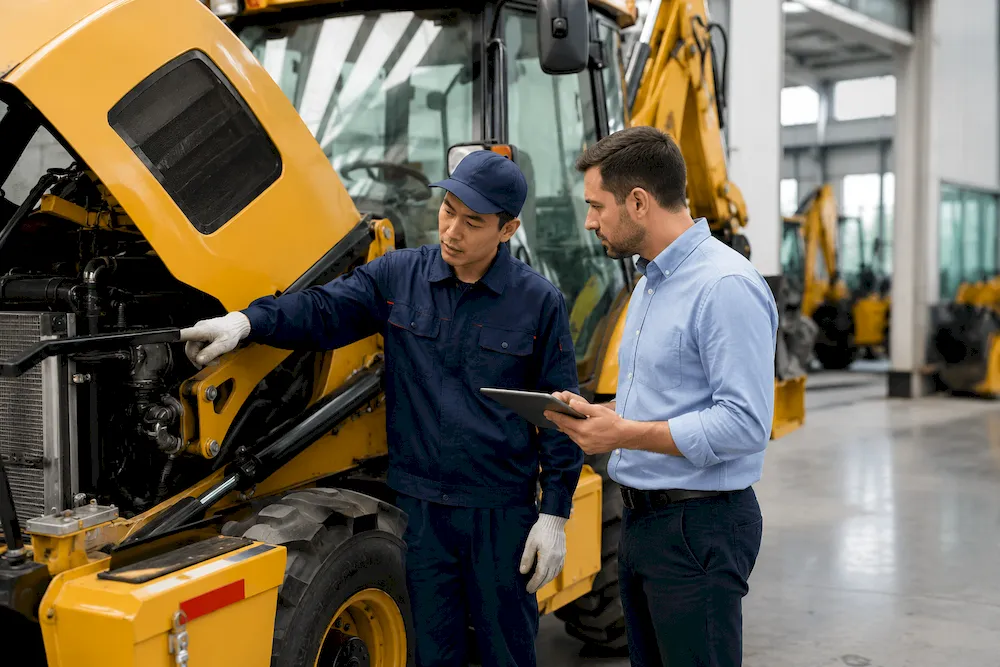
Before a backhoe loader is packed, it goes through the factory's inspection sequence. No machine leaves for the port with an open checkpoint.

  • Welding inspection on the frame and boom structures
  • Painting check after surface preparation
  • Full-machine test — engine, hydraulics and both working ends run before packing
  • Pre-shipment inspection against your confirmed configuration

See the full inspection process →

Shipping, Parts & After-Sales

What Backs the Machine After the Invoice

Export Documentation

Packing lists, invoices, certificates of origin and shipping paperwork prepared for your import process and customs broker.

Spare Parts

Wear parts and service items available per machine — the parts list for your model is included with your quotation.

Warranty

Warranty terms stated in writing with every order — terms confirmed in your quotation — plus remote technical assistance for commissioning and troubleshooting.

See the full support programme →

Backhoe Loader FAQ

Questions Buyers Ask Before Ordering

Straight answers — with final configuration details confirmed in your written quotation.

Common requests include different loader and backhoe bucket widths and a quick coupler for faster changes. The full attachment list and compatibility per model are confirmed in the quotation — tell us which tasks you need to cover and we confirm the options in writing with your quote.

Depending on the machine's dimensions and your destination port, a backhoe loader travels in a shipping container or as break-bulk / flat-rack cargo. Machines are cleaned, protected and loaded with the full export document set. The exact packing plan per model and configuration is confirmed in the quotation and is included with your quote.

Every order includes export documentation, an operation manual and a parts list for your machine. Wear parts and service items are available long-term, and our team provides remote technical assistance for commissioning and troubleshooting. Warranty terms are stated in writing with every order — the warranty period is confirmed in the quotation.

Yes. Buckets, cab options and the drive configuration are selected before production, and market-specific requirements can usually be accommodated. Final specifications are confirmed with the factory at the order stage, so nothing is guessed.

Lead time depends on the configuration you choose and the current production schedule confirmed in the quotation, and ocean freight time depends on your destination port. Our team states both dates in the quotation so you can plan your project around them.

Request a Quote

Tell Us the Work — Get a Backhoe Loader Recommendation

Describe the tasks, the destination and the timeline. Our team replies with a recommended model, configuration options and a shipping estimate to your port.

More About Backhoe Loaders

A backhoe loader is a single machine that combines a loading unit at the front and an excavating arm at the rear, built around one engine, one hydraulic circuit and one operator. Contractors choose it when digging and material handling alternate through the day: trenching in the morning, loading trucks and backfilling in the afternoon. On small and mid-size sites, that combination often replaces mobilising both an excavator and a wheel loader — two transport moves, two operators and two maintenance schedules become one.

Buying decisions usually come down to a handful of measurable parameters: operating weight, engine power, rated load, loader and backhoe bucket capacities, maximum digging depth, dumping height and drive type. Those are the figures compared in the table above, and they are the figures we confirm with the factory in writing before you commit — a machine that misses your trench depth or overloads your transport trailer is the wrong machine at any price.

For export buyers, the practical questions arrive after the specs: can buckets and cabs be configured for local tasks, how does the machine travel to the destination port, and who supplies wear parts next season. Ray Bridge handles backhoe loader enquiries in that order — model first, configuration second, then a packing and freight plan — so the quotation you receive covers the machine and the logistics together. If your project also needs on-site concrete production, see our self-loading concrete mixers; many road and rural-infrastructure contractors run both machine types on the same crew.

Email WhatsApp