Self-Loading Concrete Mixers for On-Site Concrete Production
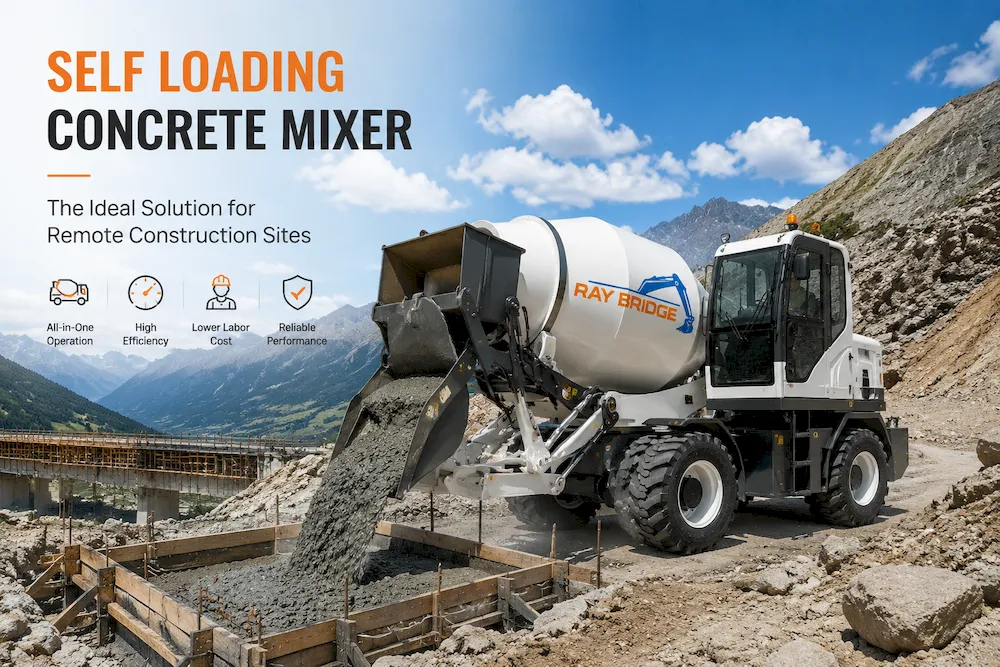
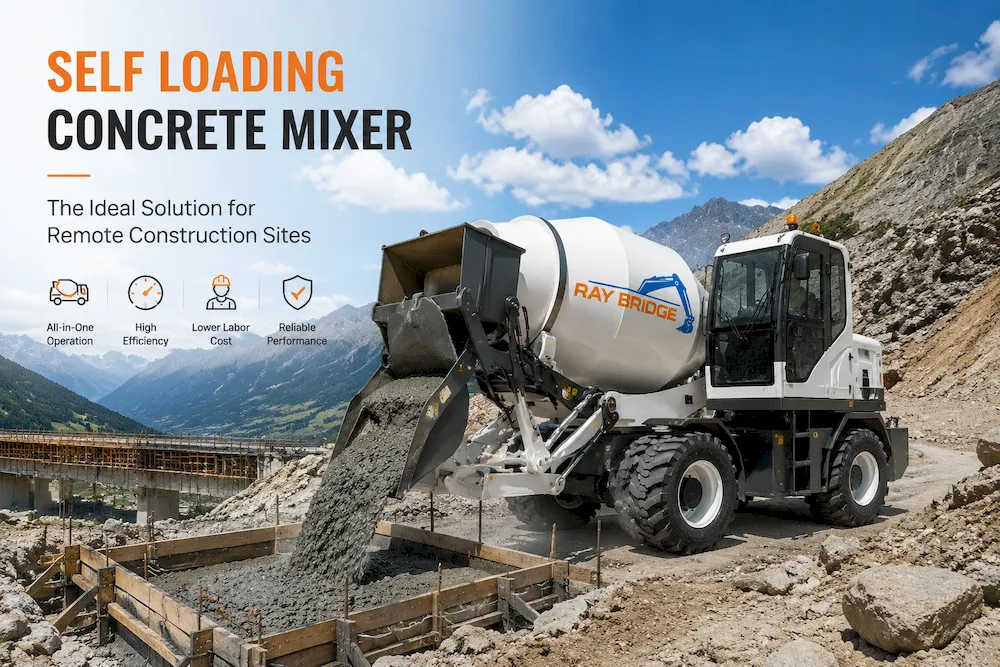
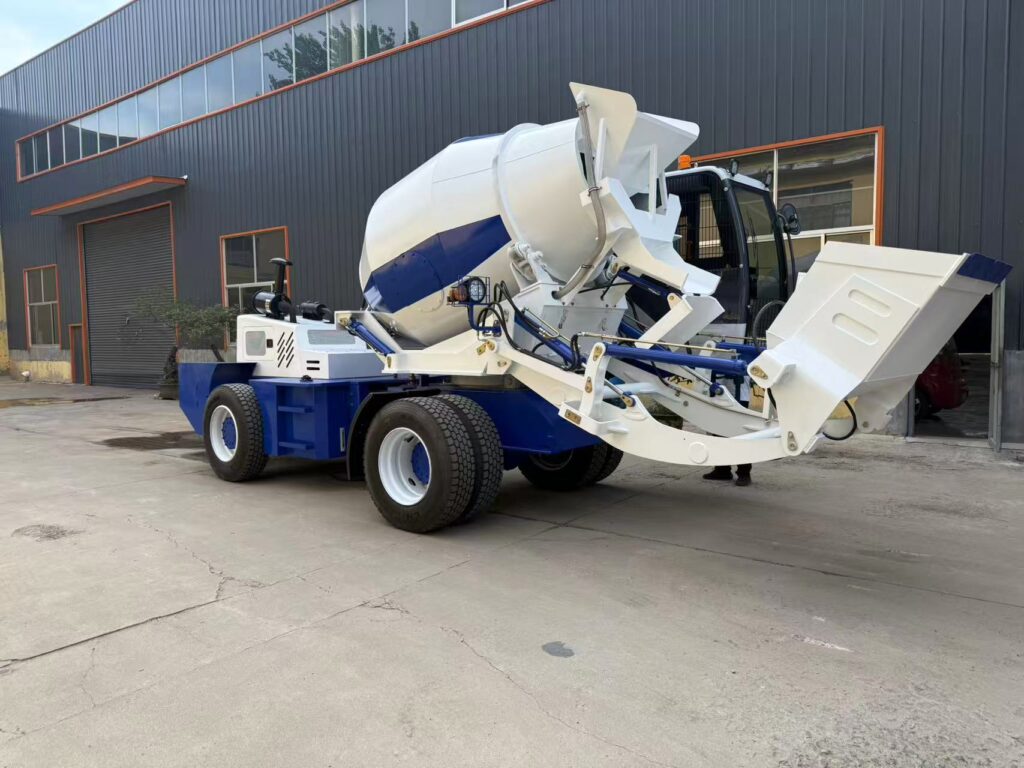
A self-loading mixer loads aggregates, batches, mixes, transports and discharges concrete with one operator — no batching plant, no transit mixer fleet. Practical where ready-mix is unavailable, too far away, or spread across many small pour points.
Conventional concrete logistics means a batching plant, a fleet of transit mixers and a schedule that collapses when a pour point moves. A self-loading concrete mixer folds that chain into one machine: it loads its own aggregates, weighs the batch, mixes while driving and discharges where the concrete is needed.
Who buys them: road contractors working along the route rather than at one fixed plant, builders on plots far from ready-mix supply, rural-infrastructure crews pouring small structures at dispersed points, and developers running several small sites with one machine.
Batch, mix, transport and discharge with one machine and one operator
No batching plant, no transit mixer fleet, no minimum ready-mix order
Mixes while driving between loading point and pour point
Output sized by batch yield — 1.6 m³ and 2.5 m³ models, ZY2900 confirmed in the quotation
Configurable drums, cabs and discharge setups per market confirmed in the quotation
The Line-Up
Three Self-Loading Mixer Models
Models are sized by concrete yield per batch. Figures still being verified with the factory are marked and confirmed in your quotation.
The systems that carry a self-loading mixer through its daily cycle. Detailed per-model specifications are confirmed with the factory at the order stage.
Self-Loading Concrete Mixers Model Comparison
Specification
RB16001.6 m³ per batch
RB25002.5 m³ per batch
RB4000Higher-capacity projects
Concrete Yield per Batch
1.6 m³
2.5 m³
—
Batch Rate
Up to 4 batches/hour
Up to 4 batches/hour
Project dependent
Drum Capacity
2.5 m³
4.5 m³
—
Engine Power
58 kW
76 kW
—
Drive System
Hydraulic 4WD
Hydraulic 4WD
—
Drum Rotation / Discharge
0–16 rpm / hydraulic
270° discharge
19–21 rpm / 270° swing
Maximum Speed
25 km/h
35 km/h
—
Operating Weight
5,200 kg
6,900 kg
—
Swipe to see all models →
Model Selection Guide
Four Steps from Pour Schedule to Order
Define your output
Add up the daily concrete volume and the number of pour points. Batch yield (1.6 m³, 2.5 m³, ZY2900 confirmed in the quotation) and realistic cycles per day give the machine size.
Check site access & dimensions
Compare machine dimensions and operating weight against your access roads, ramps and offloading crane confirmed in the quotation. A mixer that cannot reach the pour helps nobody.
Choose the configuration
Drum setup, cab level and discharge options are selected per market and task. We confirm what each configuration includes in writing before production.
Confirm the shipping plan
Container or break-bulk, packing standard, documents and freight to your port — confirmed with the quotation so the landed cost is clear before you order.
How It Works
One Operator, Four Working Steps
The working cycle of a self-loading mixer, from aggregate stockpile to placed concrete. This is the real sequence — numbered as it happens on site.
Load aggregates
The operator drives the loading bucket into the sand and aggregate stockpiles and fills the batch in one pass — no separate loader, no shovel crew.
Weigh & batch
Aggregates, cement and water are measured for the mix design, so every batch leaves the loading point to the same recipe confirmed in the quotation.
Mix while driving
The drum rotates as the machine travels to the pour point, so the concrete arrives mixed instead of the machine standing still to mix.
Discharge where needed
At the pour, the drum discharges via the chute at working height — into wheelbarrows, pumps or the formwork directly, then the cycle restarts.
Main Components & Options
What the Machine Is Made Of
The systems that carry a self-loading mixer through its daily cycle. Detailed per-model specifications are confirmed with the factory at the order stage.
Drum
The mixing drum rotates through loading, travel and discharge, blending the batch while the machine moves between stockpile and pour.
Loading Arm & Bucket
The front loading arm scoops sand and aggregate from the stockpile and charges the drum — the "self-loading" half of the machine.
Weighing System
Batches are measured rather than guessed, which is what keeps mix design consistent across the day's pours. System specification per model confirmed in the quotation.
Cab
The operator runs loading, batching, driving and discharge from one position, with the controls and visibility needed to work a full shift confirmed in the quotation.
Water Tank
Carried water is metered into the batch, so the mix design holds even when the site has no water point at the loading area. Tank capacity per model confirmed in the quotation.
Discharge Chute
The chute takes concrete out of the drum and places it at working height — into wheelbarrows, pumps or formwork — with a rotation range per model confirmed in the quotation.
Factory & Quality Control
Every Machine Passes Inspection Before It Ships
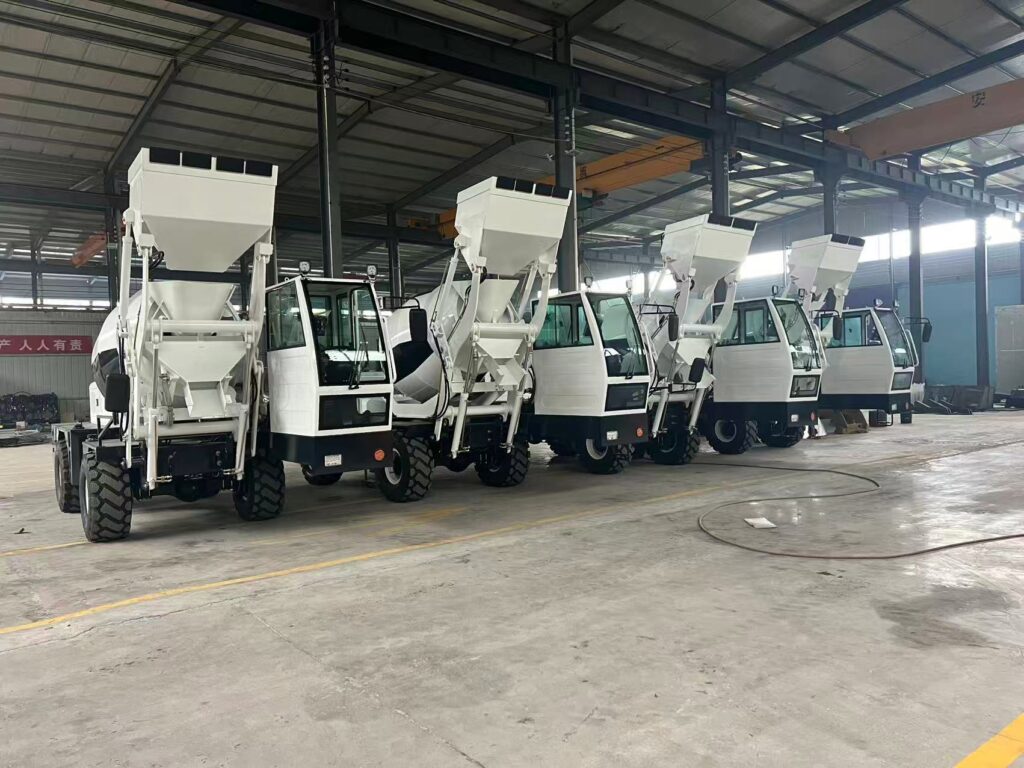
Before a self-loading mixer is packed, it goes through the factory's inspection sequence. No machine leaves for the port with an open checkpoint.
Welding inspection on the frame and drum support structures
Painting check after surface preparation
Full-machine test — engine, hydraulics, drum and loading arm run before packing
Pre-shipment inspection against your confirmed configuration
Packing lists, invoices, certificates of origin and shipping paperwork prepared for your import process and customs broker.
Spare Parts
Wear parts and service items available per machine — the parts list for your model is included with your quotation.
Warranty
Warranty terms stated in writing with every order — terms confirmed in your quotation — plus remote technical assistance for commissioning and troubleshooting.
Straight answers — with final configuration details confirmed in your written quotation.
Start from your daily concrete volume and the number of pour points. Yield per batch is 1.6 m³ on the ZY1600 and 2.5 m³ on the ZY2500, with the ZY2900 yield still confirmed in the quotation. Batches per day depend on aggregate stockpile layout, water supply and the travel distance between loading and pouring — cycle details are confirmed in the quotation. Send us your pour schedule and we size the model for you.
One operator runs the whole cycle — loading, batching, driving and discharge — from the machine's cab. The operation manual covers walk-around checks, batch settings and daily maintenance, and our team provides commissioning guidance and remote support when the machine arrives.
Wear parts and service items are available per machine, and the parts list for your model is included with your quotation. Parts supply is long-term, so you can order next season's service items as easily as the first set.
Shipping dimensions differ by model and are confirmed in the quotation. Depending on size, a self-loading mixer travels in a container or as break-bulk / flat-rack cargo; the packing plan and loading photos are confirmed with your quote so you can clear customs and plan site offloading.
Consistent concrete comes from consistent inputs: weighed aggregate batches and metered water, mixed for the drum's designed cycle. The weighing system specification is confirmed in the quotation per model. Operators follow the batch settings in the manual, and commissioning guidance covers the first runs on your materials.
Request a Quote
Tell Us Your Pour Schedule — Get a Mixer Recommendation
Describe the daily concrete volume, the pour points and the destination. Our team replies with a recommended model, configuration options and a shipping estimate to your port.
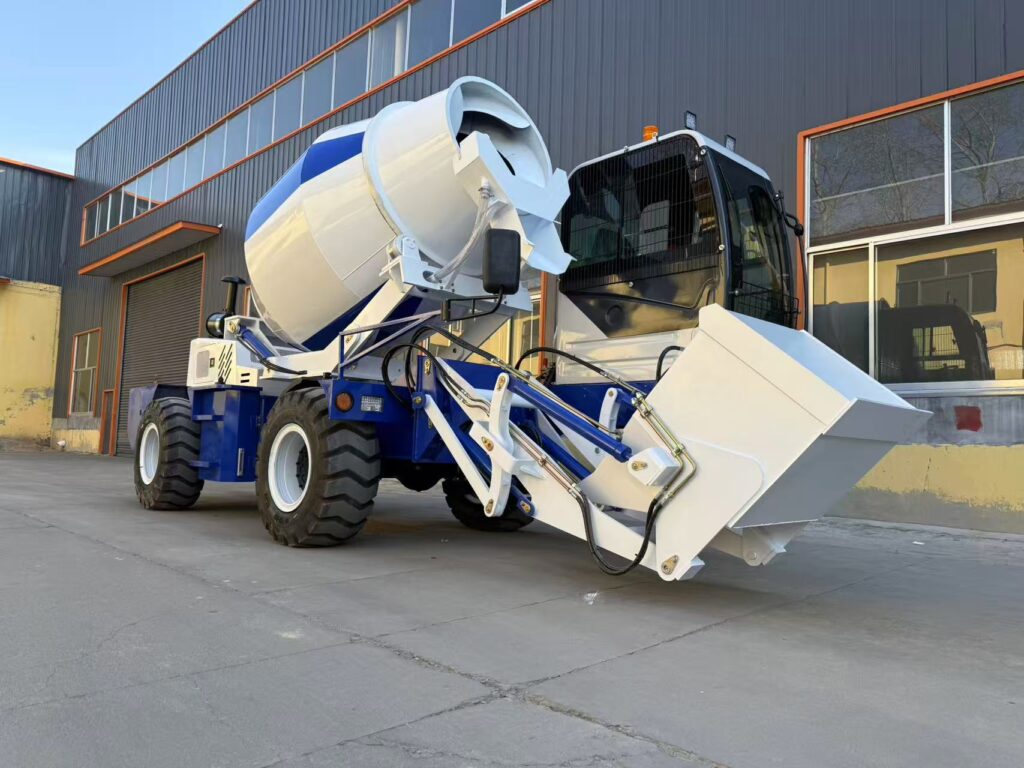
A self-loading concrete mixer is a wheeled machine that combines the jobs of a loading shovel, a batching plant and a transit mixer: it loads its own aggregates with a front bucket, measures the batch, mixes in a rotating drum while driving, and discharges through a chute at the pour point. One operator runs the entire cycle. Where a project’s concrete is spread across culverts, house plots or bridge sites instead of pooled at one big pour, that self-contained workflow is the reason contractors buy the machine.
Sizing starts with output, not engine power. Concrete yield per batch — 1.6 m³ on the ZY1600 and 2.5 m³ on the ZY2500, then matched to a realistic number of batches per day gives the daily volume one machine can deliver. Cycle time depends on things no brochure can state: how far the stockpile sits from the pour, water availability and site roads. That is why we ask for your pour schedule before recommending a model, and why estimated hourly or daily output figures are confirmed rather than advertised on this page.
For export buyers the questions after selection are practical: shipping dimensions for container or break-bulk transport, the document set for customs, wear parts supply, and how quickly an operator can be productive on a new machine. We handle those in the quotation together — model, configuration, packing and freight. If your sites also need trenching and loading work alongside concrete production, see our backhoe loaders; many road and rural-infrastructure crews run one of each.