Product Comparisons

Backhoe Loader vs Excavator + Wheel Loader

Most buyers arrive at this comparison asking “which is better — a backhoe loader, or an excavator with a wheel loader?” Framed that way, the honest answer is always “it depends”, and the decision goes nowhere. The version of the question that produces a decision is: what tasks does this site need finished each day, where do they sit, and who will operate the machines?

RAY BRIDGE7 min read
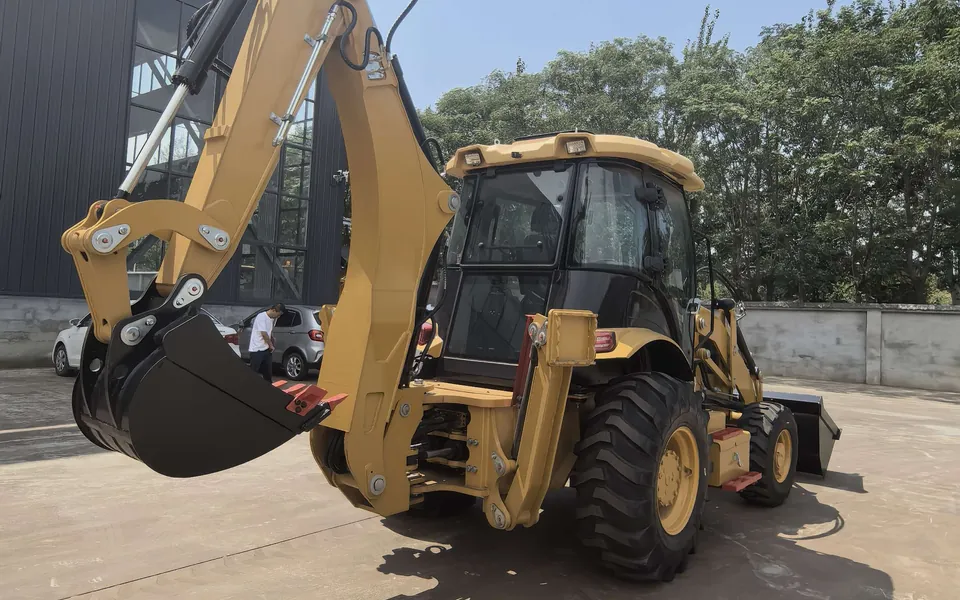
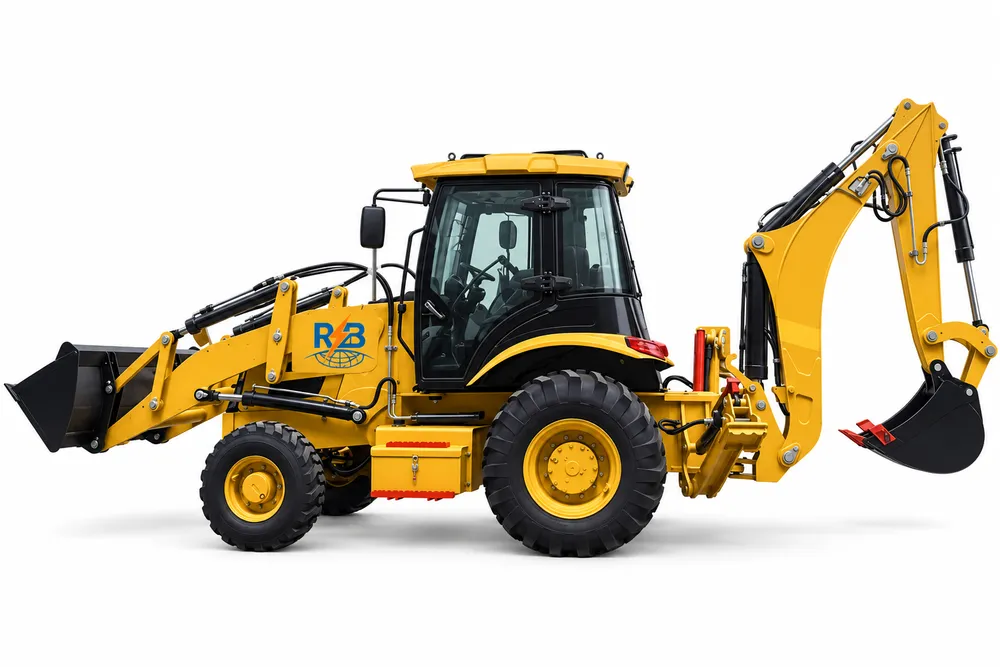
Yellow Ray Bridge backhoe loader viewed from the side
Product Comparisons / Ray Bridge

The Real Question: Tasks per Day, Not Machine Types

Most buyers arrive at this comparison asking “which is better — a backhoe loader, or an excavator with a wheel loader?” Framed that way, the honest answer is always “it depends”, and the decision goes nowhere. The version of the question that produces a decision is: what tasks does this site need finished each day, where do they sit, and who will operate the machines?

This guide gives you a comparison method, not a verdict. It walks through what each setup actually does on the ground, the cost lines that decide the arithmetic, and an illustrative worked example you can rebuild with your own prices. The method is the same one we use when a customer asks us to recommend a configuration — and it sometimes leads us to tell a buyer that two dedicated machines are the better answer.
What Each Setup Does

The backhoe loader: one machine, one operator

A backhoe loader digs with the rear boom and loads with the front bucket, and the operator switches between them in minutes. Because it runs on wheels, it moves between work points on the site — and between nearby work points and sites — under its own power. On a scattered task list (a trench here, a culvert there, gravel to shift after lunch), one machine and one operator simply follow the work.

The trade-off is that each function is a compromise. Dig depth and breakout force are lower than a dedicated excavator of comparable investment, and the front bucket carries less per pass than a wheel loader bucket. The backhoe loader is not the fastest machine at any single task — its case rests on covering all of them without the second machine, second operator and extra transport.

The excavator + wheel loader pair: two specialists working at once

The pair splits the work cleanly. The excavator concentrates on digging and is the more productive digger through a full shift; the wheel loader keeps trucks, stockpiles and hard standings moving. Where digging and loading happen simultaneously at different points on the site, the pair can out-produce one backhoe loader by a wide margin.

The trade-off sits outside the work itself: two purchase prices or two rentals, two operators to staff and keep busy, and — for a tracked excavator — a transporter or lowbed every time it moves between sites. The pair wins on productive sites and loses on scattered ones, which is exactly what the cost lines below are for.

The Cost Lines to Compare

Comparing only purchase prices is where most of these decisions go wrong. Whatever machines you are weighing, put each of these lines into the calculation — with your own local figures, not catalogue numbers.

Cost lines that decide the comparison
Cost line What to include
Acquisition Purchase price or financing, the attachments each setup needs, and import duty and taxes at your destination.
Transport between sites Lowbed or transporter moves for tracked machines; own-power travel for wheeled machines. Count every planned move.
Operators Wages for one operator versus two — plus availability, training and cover when one is absent.
Fuel Consumption across the whole working day, including the hours a second machine spends idling between tasks.
Maintenance Servicing and wear parts for one machine versus two, including tyres or undercarriage.
Idle time The cost of hours a machine spends waiting for its task — often the largest hidden line on scattered sites.
Resale Eventual resale value and local used-equipment demand for each machine type in your market.

A Worked Example (Illustrative)

Illustrative example. The scenario below is illustrative only. It contains no real project data and no Ray Bridge figures. Any numbers you attach to it should come from your own quotations, fuel costs and operator wages.

Picture a 2 km rural road rehabilitation with a scattered task list: clean out culvert trenches at intervals along the length, cut a shallow drainage ditch, load shoulder gravel from a stockpile at one end, and cast small headwalls at the culverts. Nothing on this job is high-volume — the dig points are small and spread out, and loading happens in bursts when trucks arrive.

With one backhoe loader, a single machine and operator walk the road down: trench at the first culvert, move on, come back to load gravel when the trucks show up. Because the tasks alternate, machine-hours align with the work — the backhoe stays busy precisely because the site never asks it to do one thing all day.

With an excavator and wheel loader, the excavator walks the culverts while the loader waits at the stockpile. When loading dries up for two hours, the loader and its operator idle — you keep paying for a machine producing nothing. On this shape of site, the single machine usually wins on total cost even where its hourly output in any one task is lower.

Now reverse the conditions: one deep, concentrated excavation at a single point, plus truck loading that runs continuously all day. The same pair that lost above starts winning — the excavator digs without interruption while the loader loads without interruption, and each machine runs near its full capacity. Same machines, different site shape, different answer.

When Two Dedicated Machines Still Win

Because this article could read as an argument for backhoe loaders, here are the cases where the pair is the honest recommendation:

  • Deep or high-volume excavation. Where dig depth and continuous digging hours dominate the job, dedicated excavators in the heavier classes finish work a backhoe loader is not built for.
  • High-utilisation fleets and rental companies. Businesses that bill machine-hours want both specialists running in parallel; utilisation, not task-switching, is their business model.
  • Continuous truck-loading operations. A loader that loads trucks all day at a quarry, brickworks or material yard earns its keep as a dedicated machine.
  • Existing fleets. If you already own a wheel loader in good condition, adding an excavator can cost less than replacing the whole capability with one new machine.

Selection Checklist

Before you commit to either setup, write a one-line answer to each of these six questions — the pattern in your answers usually points to the winner:

  • How often do digging and loading switch during a normal day — twice, or twenty times?
  • How far apart are the work points, and how would each setup travel between them?
  • Do digging and loading ever need to happen at the same time on this project?
  • What are the daily volumes — scattered small tasks, or concentrated digging and loading?
  • Can you reliably staff two operators, or does one operator simplify crewing and cover?
  • What does used-equipment demand look like in your market for each machine type?

Comparing Setups for Your Site?

Send Us the Task List — We’ll Run the Numbers With You

Describe the tasks, the distances between work points and your crew. We compare the setups against your actual site conditions and tell you honestly where a backhoe loader fits — and where it doesn’t.

FAQ

Is a backhoe loader always the cheaper option?

No — and it isn’t a purchase-price question alone. Where work is scattered and task-switching is frequent, one machine and one operator usually total less to own and run. Where volumes are concentrated and run all day, two dedicated machines can out-produce a backhoe loader by enough to cover their extra costs. Run the cost lines above against your own numbers before deciding.

Can a backhoe loader dig as deep as an excavator?

Within utility-trench and foundation-pit ranges, a backhoe loader covers the digging that most road, municipal and farm jobs need. For deep or high-volume excavation, dedicated excavators in the heavier classes go further. Check the rated dig depth of the specific model you are considering against your deepest recurring task — current specification sheets are available from our team on request.

How do the two setups move between sites?

A backhoe loader moves between work points under its own power, which suits scattered sites and short moves. A tracked excavator needs a transporter or lowbed for every move, and a wheel loader adds a second machine to schedule and fuel. If your project spans several dispersed work points, put transport cost into the comparison early — it is often where the arithmetic flips.

Planning an equipment enquiry?

Contact

FROM RESEARCH TO ENQUIRY

Turn your questions into an enquiry.

Share the models, quantities, destination country and configuration requirements.

Discuss your requirements

SEARCH RAY BRIDGE

What are you looking for?

Search Ray Bridge equipment, articles and information.

Equipment

Request a quote