
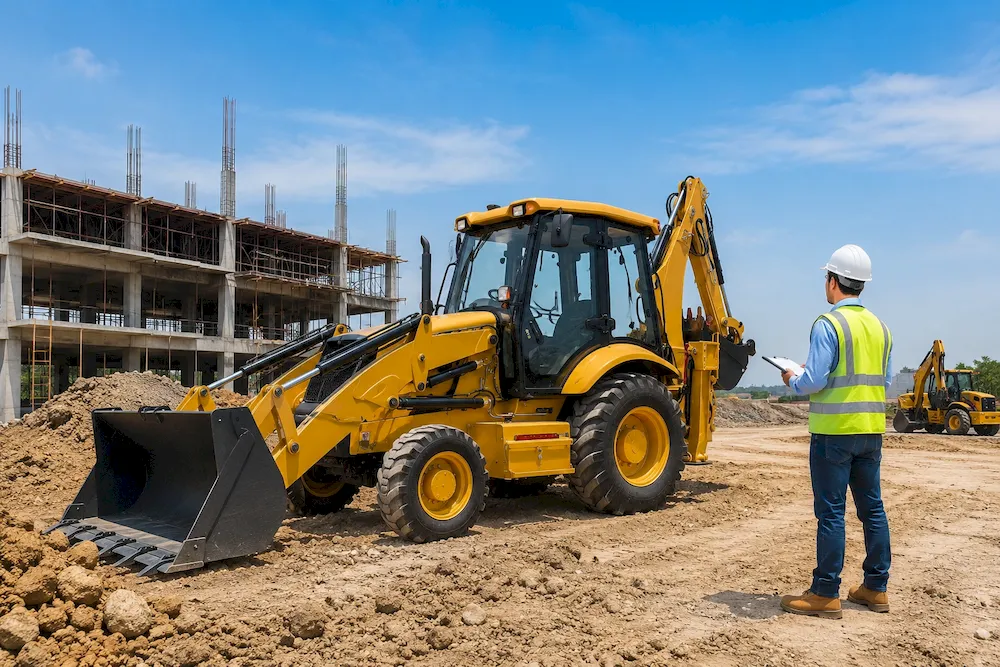
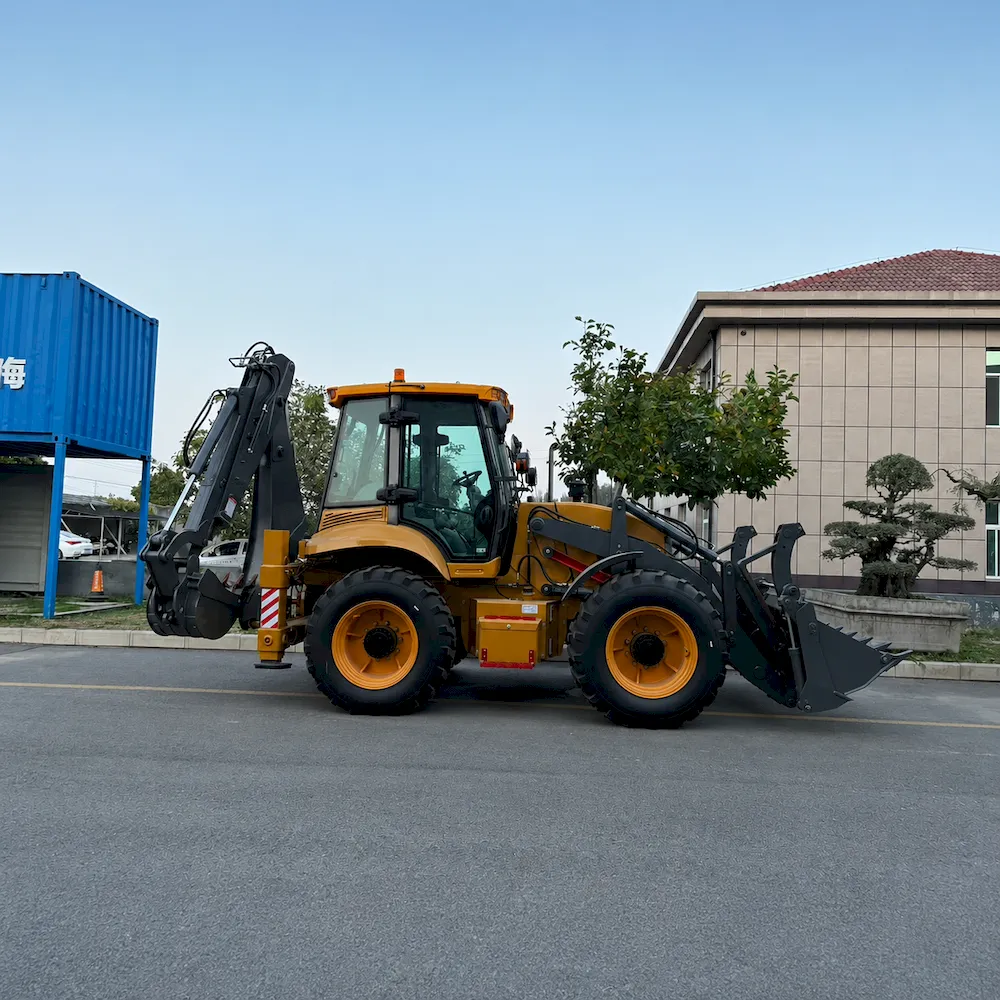
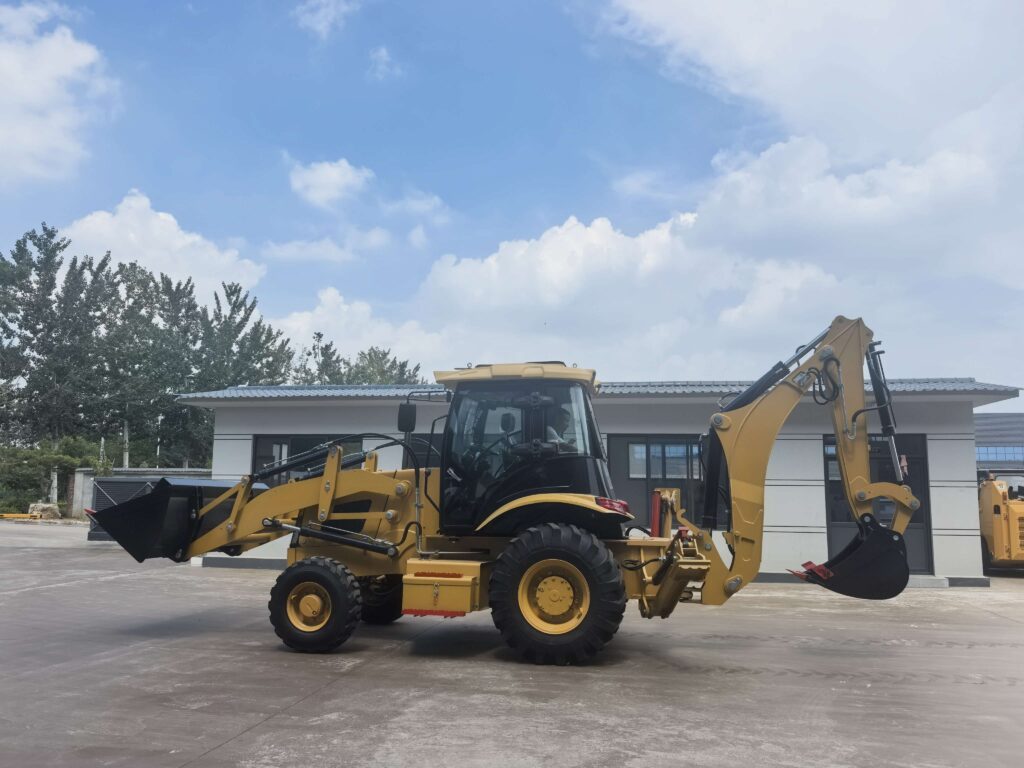
Backhoe Loader
RB420F Backhoe Loader
A 4WD backhoe loader with a 1.5 m³ loader bucket, 2,800 kg rated load and 4,100 mm standard maximum digging depth.
Application · Road Construction
Road work can involve trenching, loading, backfilling and concrete placement at different points along a route. Compare the documented working dimensions and capacities before selecting equipment for each task.
The Buying Problem
Define the work, access and output requirements before choosing a model.
Record the distance between material storage and each pour, the required volume at each location and any limits on concrete delivery.
List the trench dimensions, loading work, backfilling and travel between work points so the required machine envelope can be compared.
Check route width, height, surface condition, gradients and any bridge or axle-load restrictions against the documented machine dimensions and weight.
The Task List
The daily tasks a road crew has to finish between setting out and handover.
Machine Matching
Two lines cover the road-work task list: one digs and loads, one batches and pours. Both travel between work points under their own power.
Product Line 01
Compare the backhoe digging dimensions and front-loader capacity with the trenching, loading and backfilling requirements. Confirm attachments and the final configuration in the quotation.
Product Line 02
Compare documented concrete yield, drum capacity, dimensions and operating weight with the required pour volume and site access. Do not treat drum capacity as concrete output.
Before You Order
Four steps from task list to model choice — the same sequence our team runs with every enquiry.
Record trenching, loading, backfilling, concrete placement and travel requirements for the planned work.
Define trench dimensions and the concrete volume required at each pour point. Compare output using documented concrete yield, not drum capacity.
Compare route width, height and load restrictions with the dimensions and operating weight on the selected product page.
Record the selected model, attachments, options and any unresolved specifications in the written quotation.
On the Job
How the two machines run as one sequence on a road section.
Mark the digging, material-storage and concrete-placement locations and record their access limits.
Use the selected backhoe-loader functions only where the documented dimensions and configuration match the work.
Use the selected mixer according to its confirmed configuration and documented capacity values.
Plan discharge, finishing and onward travel around the site requirements and agreed operating procedure.
Related Products
The two models most often quoted for this application.
Backhoe Loader
A 4WD backhoe loader with a 1.5 m³ loader bucket, 2,800 kg rated load and 4,100 mm standard maximum digging depth.
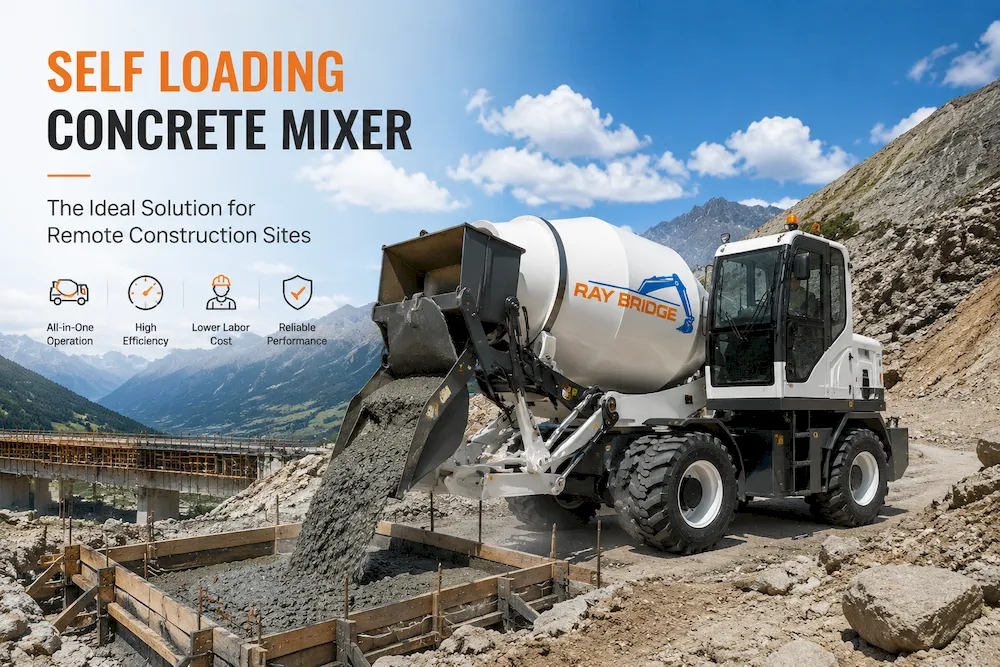
Self-Loading Concrete Mixer
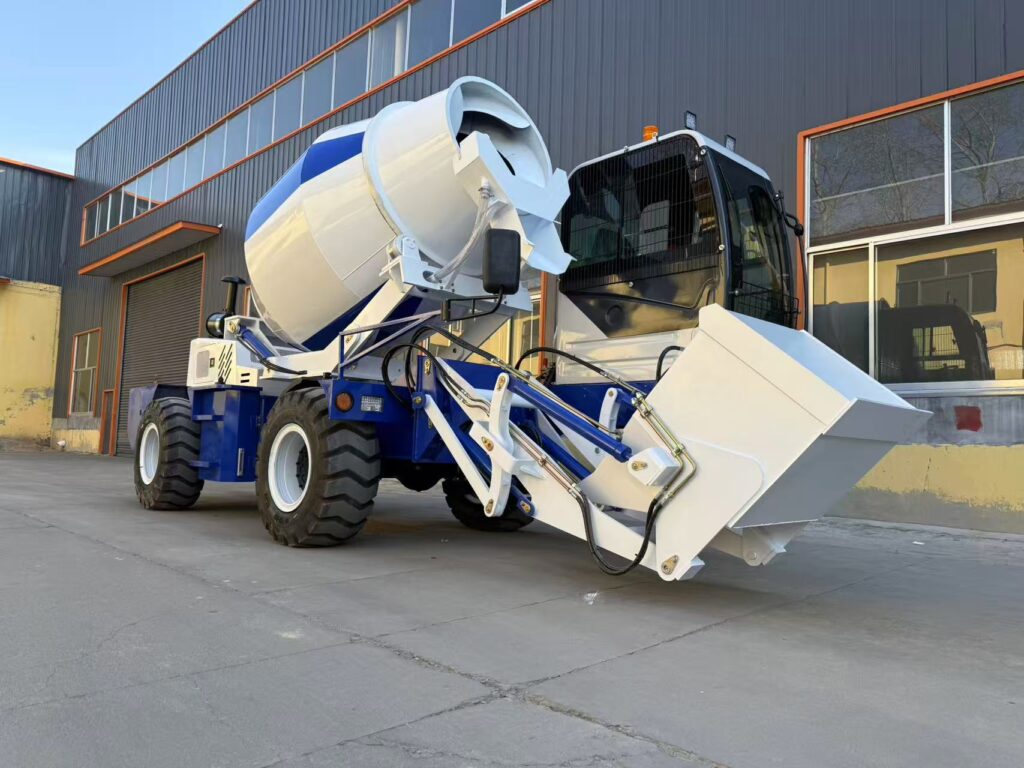
A self-loading concrete mixer with 4.5 m³ drum capacity, 2.5 m³ verified concrete yield per batch and 270° discharge.
FAQ
Compare the documented digging depths and dimensions on the product pages: RB420F lists a 3,000 mm digging depth, RB388 Standard lists 3,300 mm, and RB388 Luxury lists 3,400 mm. Final suitability depends on the trench geometry, ground conditions and required attachments.
RB1600 lists 1.6 m³ concrete yield and RB2500 lists 2.5 m³ concrete yield. RB4000 lists a 4 m³ drum capacity, but its concrete yield is still TBD and should not be treated as 4 m³ output.
Record access width and height, trench dimensions, material-handling needs, pour volume, travel route and any attachment requirements, then compare them with the confirmed product specifications.
Yes, as separate machines for different work: a backhoe loader for digging and loading, and a self-loading mixer for batching, mixing and discharging concrete. Price and confirm each configuration separately.