
Buying Guides
How to Choose a Backhoe Loader for Construction Projects
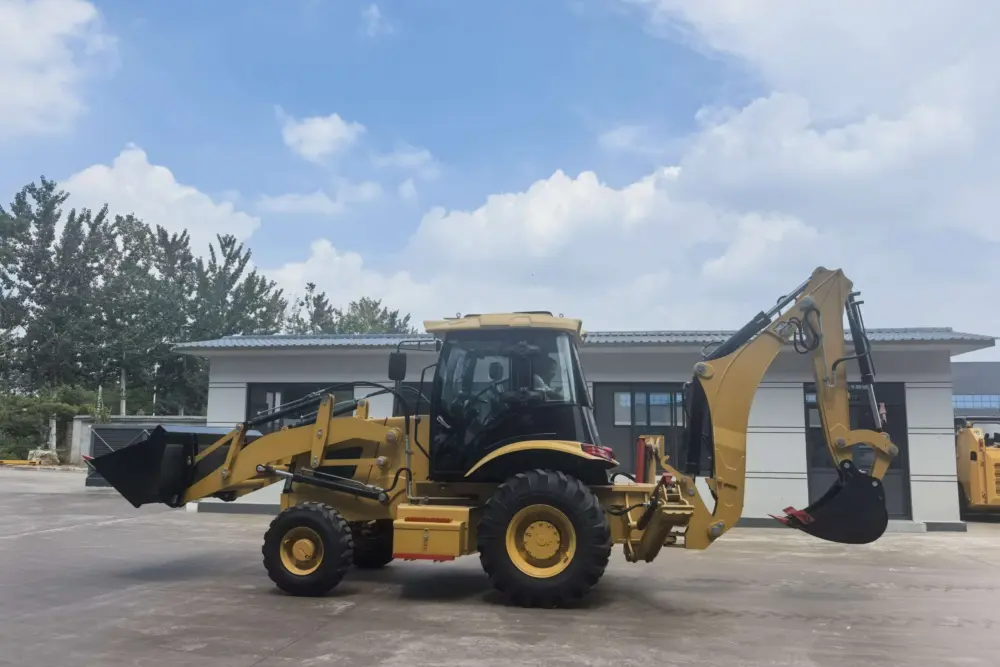
Choosing a backhoe loader is not simply a matter of selecting the machine with the largest engine or the deepest headline digging figure. A useful selection starts with the work: the trench dimensions, the material to be loaded, the access route, the transport method and the attachments that will actually be fitted. Those requirements can then be compared with a documented specification sheet.
This guide uses the confirmed information published for the Ray Bridge RB420F, RB388 Standard and RB388 Luxury. It does not assume that an option available on one model is available on another. Final configuration, engine, attachments, warranty, documents and delivery terms should always be written into the quotation or sales agreement.
Start with the Work, Not the Model Name
A backhoe loader combines a front loader bucket with a rear excavating arm. That basic arrangement makes the machine relevant when a job alternates between material handling and excavation. However, two projects described as “construction work” can require very different machines.
Before comparing models, write down the work in measurable terms:
- Maximum trench or foundation depth
- Typical trench width and required bucket width
- Material type and the volume moved per loading cycle
- Required dumping height for trucks or stockpiles
- Narrowest gate, road or working area
- Height and weight limits during transport
- Ground conditions and the need for four-wheel drive
- Attachments that must be confirmed with the machine
This list prevents a common buying error: selecting a machine because one impressive number looks attractive while a less visible constraint makes it unsuitable.
Compare the Digging Envelope
Maximum digging depth
Maximum digging depth is one of the first figures buyers compare. The RB420F and RB388 Standard each list a standard maximum digging depth of 4,100 mm. Their supplied records also list optional telescopic-arm depths of 5,000 mm for the RB420F and 5,300 mm for the RB388 Standard. The RB388 Luxury lists a maximum digging depth of 3,820 ± 20 mm.
These values are not interchangeable with comfortable working depth. The trench profile, bucket angle, ground level and safe operating setup all affect real work. Use the specification as a screening number, then compare it with the deepest planned excavation and the operating instructions for the confirmed configuration.
Backhoe bucket capacity
All three published models list a 0.3 m³ backhoe bucket capacity. Capacity alone does not specify bucket width, tooth arrangement or suitability for a particular material. If trench width or attachment type matters, add it to the quotation rather than assuming that a catalogue image defines the supplied bucket.
Check the Loader End Separately
The loader end should be evaluated as its own working system. The RB420F and RB388 Standard list 1.5 m³ loader buckets and 2,800 kg rated loads. The RB388 Luxury lists a 1.2 m³ loader bucket and a 2,500 kg rated load. Those figures help compare nominal loading capability, but the material density, bucket type, ground surface and operating procedure still matter.
Dumping height can be decisive when loading a particular truck. The published figures are 2,700 mm for the RB420F, 2,800 mm for the RB388 Standard and 3,050 ± 50 mm for the RB388 Luxury. Measure the receiving vehicle or hopper and check the complete loading geometry before ordering.
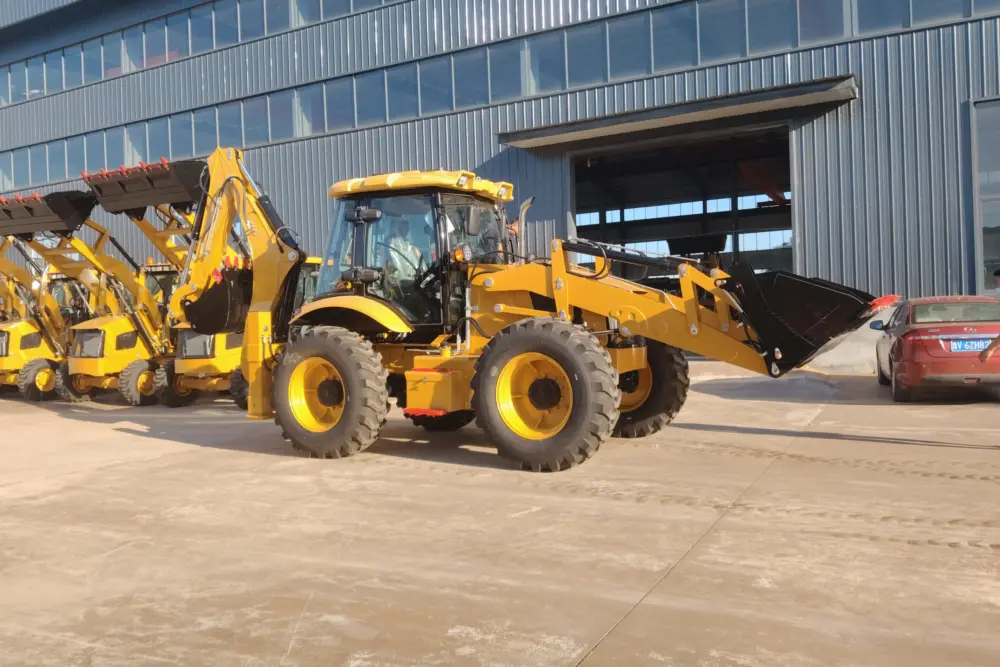
Use Operating Weight to Screen Access and Transport
Operating weight affects transport planning, ground pressure considerations and site access. The three documented values are:
- RB420F: 7,500 kg
- RB388 Standard: 8,500 kg
- RB388 Luxury: 9,300 kg
A heavier machine is not automatically better, and a lighter machine is not automatically easier to use. The correct question is whether the machine fits the route, trailer, bridge limits, unloading arrangement and working surface. Confirm the final shipping and operating configuration because attachments and options may change the delivered weight.
Measure the Machine Against the Site
Overall dimensions
The RB420F is listed at 7,600 × 2,360 × 2,890 mm. The RB388 Standard is listed at 7,600 × 2,380 × 2,890 mm. The RB388 Luxury record provides separate dimensions: total length 6,400 ± 80 mm, overall width 2,450 ± 20 mm and cab height 3,250 ± 10 mm.
Do not compare only length. A machine may clear a road but fail at a low doorway, narrow gate or turning area. Record the smallest width and height along the complete route from unloading point to working area.
Ground clearance and drive
The RB420F and RB388 Standard list 300 mm minimum ground clearance. All three models are listed as four-wheel drive. These facts help with initial comparison, but they are not a guarantee that a machine can cross a particular slope, soft area or obstacle. A jobsite risk assessment and the operating manual remain necessary.
Do Not Use Engine Power as the Only Selection Rule
The RB420F lists a 76 kW Yunnei diesel engine. The RB388 Luxury lists the YCD4J22T-115 engine at 85 kW. The RB388 Standard engine and rated power remain TBD because the supplied source contains conflicting entries. Publishing a guessed figure would make a clean model comparison impossible, so that field should be confirmed in writing before purchase.
Power matters, but it must be considered with hydraulic performance, machine mass, gearing, work cycle and the selected attachment. If a seller cannot show which engine belongs to the quoted machine, treat that as an unresolved order item.
Confirm Standard and Optional Equipment
Words such as “standard,” “luxury,” “optional” and “available” can hide major differences. A photograph may show an attachment or cab feature that is not part of the quoted configuration. Build a line-by-line configuration list covering the loader bucket, backhoe bucket, telescopic arm, coupler, tyres, cab equipment, controls, electrical system and any market-specific requirement.
For the RB420F and RB388 Standard, the telescopic-arm digging depth is explicitly listed as optional. It should therefore appear as a separate written item if required. Do not treat the deeper optional figure as the standard machine’s digging depth.
Compare Speed Only When Travel Is Part of the Job
The RB420F and RB388 Standard list maximum speeds of 30 km/h; the RB388 Luxury lists 32 km/h. These are specification values, not promises of average site travel speed. Surface condition, load, local rules and safe operation determine actual travel. If machines will be transported between sites, trailer and shipping dimensions may matter more than maximum speed.
Create a Written Buying Checklist
A complete quotation should make it possible to identify exactly what will be supplied. Before payment, ask for:
- The public model name and supplier model reference
- The final technical specification sheet
- The exact engine model and rated power
- Standard equipment and separately priced options
- Bucket capacities and required bucket widths
- Any telescopic arm and its confirmed working dimensions
- Operating and shipping dimensions for the quoted configuration
- Inspection evidence and documents agreed for the order
- Warranty, parts and assistance terms in writing
- Delivery responsibility, packing method and applicable trade terms
If any item is not supported by the current record, label it TBD and resolve it before the agreement becomes final.
Which Ray Bridge Backhoe Loader Should You Shortlist?
The RB420F and RB388 Standard share several headline figures: 1.5 m³ loader bucket, 2,800 kg rated load, 0.3 m³ backhoe bucket and 4,100 mm standard digging depth. Their listed operating weights and some dimensions differ. The RB388 Standard also lists the deepest optional telescopic-arm figure in this group, while its engine information still requires confirmation.
The RB388 Luxury has a different specification profile: 9,300 kg operating weight, 1.2 m³ loader bucket, 2,500 kg rated load, 3,820 ± 20 mm digging depth, 85 kW power and a higher listed dumping height. It should be compared as a distinct configuration rather than assumed to be a cosmetic version of the Standard.
The best shortlist is the smallest set of models that meets the measurable work and access limits. Review the backhoe loader range, then open the individual RB420F, RB388 Standard and RB388 Luxury pages for the confirmed tables.
Frequently Asked Questions
What should I look for when buying a backhoe loader?
Start with digging depth, bucket capacities, rated load, dumping height, operating weight, overall dimensions and drive type. Then confirm the exact engine, attachments, cab equipment, documents, warranty and delivery terms for the quoted machine.
What size backhoe loader do I need?
The required size depends on trench dimensions, material loading, access and transport limits. Use operating weight and dimensions as constraints rather than choosing by a broad compact or full-size label alone.
How deep can a backhoe loader dig?
It depends on the model and arm. The RB420F and RB388 Standard list 4,100 mm standard maximum depth. The RB388 Luxury lists 3,820 ± 20 mm. Optional telescopic-arm figures must not be presented as standard.
Is a telescopic backhoe arm worth choosing?
It may be relevant when the required depth or reach exceeds the standard arm’s documented envelope. Confirm the option, its dimensions, additional cost and any effect on transport or operation in writing.
Is a heavier backhoe loader always more powerful?
No. Operating weight and rated engine power describe different characteristics. Selection should consider the whole specification and job, not assume that one number determines performance.
Can product photos be used to confirm the supplied configuration?
Photos help identify the model and visible features, but they do not replace a written configuration. Attachments or cab details shown in a gallery may be optional or may differ by production batch.