
Applications
Backhoe Loaders for Road and Drainage Work: A Practical Selection Guide
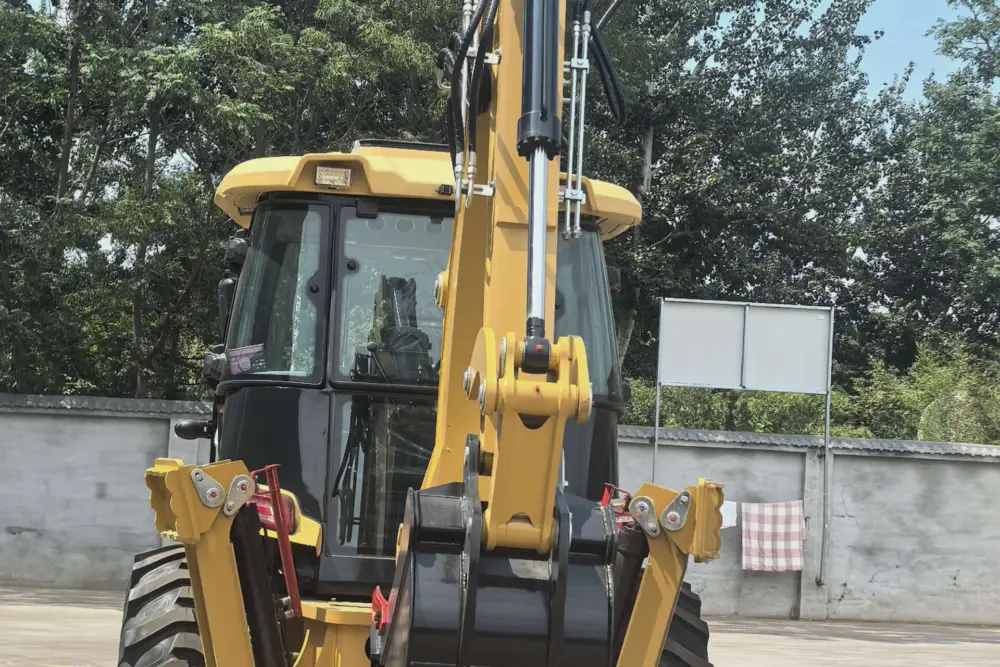
Road and drainage work can place excavation, material handling and backfilling tasks along the same route. A backhoe loader may be considered because it has both a rear digging end and a front loader end, but suitability depends on measurable requirements rather than the application name alone.
This guide explains how to compare the RB420F, RB388 Standard and RB388 Luxury for road-related tasks without claiming that any model is automatically suitable for a specific project. Ground conditions, traffic management, trench safety, attachments and local operating rules require separate assessment.
Define the Roadwork Tasks
Start with a task schedule instead of a machine shortlist. Typical work categories may include culvert trenches, side drains, utility crossings, foundation excavations, loading aggregate, moving spoil and backfilling. Each category creates a different specification question.
- How deep and wide is the excavation?
- What bucket width and profile are required?
- What material will be loaded and where will it be discharged?
- What truck or hopper height must the loader clear?
- How much space is available for stabilisers and boom movement?
- What width, height and weight restrictions exist along the route?
- Will an optional telescopic arm be required?
Answering these questions turns a broad use case into a specification checklist.
Match Trench Depth to the Documented Arm
The RB420F and RB388 Standard each list a standard maximum digging depth of 4,100 mm. The RB388 Luxury lists 3,820 ± 20 mm. These values help decide which machines remain in the initial comparison.
If the planned depth exceeds the standard figure, the RB420F record lists a 5,000 mm optional telescopic-arm depth and the RB388 Standard lists 5,300 mm. An optional depth is valid only when the telescopic arm is included and confirmed. It should never replace the standard depth in a general claim.
Allow for the actual trench geometry
Maximum digging depth is not a complete trench plan. Consider ground level changes, the stand-off from an unsupported edge, pipe bedding, bottom shaping and the space needed to move spoil. The responsible contractor must establish a safe method for the real site.
Specify the Backhoe Bucket
All three models list a 0.3 m³ backhoe bucket capacity. Road drainage work may require a particular width for a pipe, channel or utility crossing. Capacity does not identify width, teeth or profile, so the exact supplied bucket must be written into the configuration.
Where several trench sizes are planned, ask for attachment compatibility rather than assuming every bucket seen in a photo can be ordered. A quick coupler or additional bucket is also an order-specific item unless explicitly included.
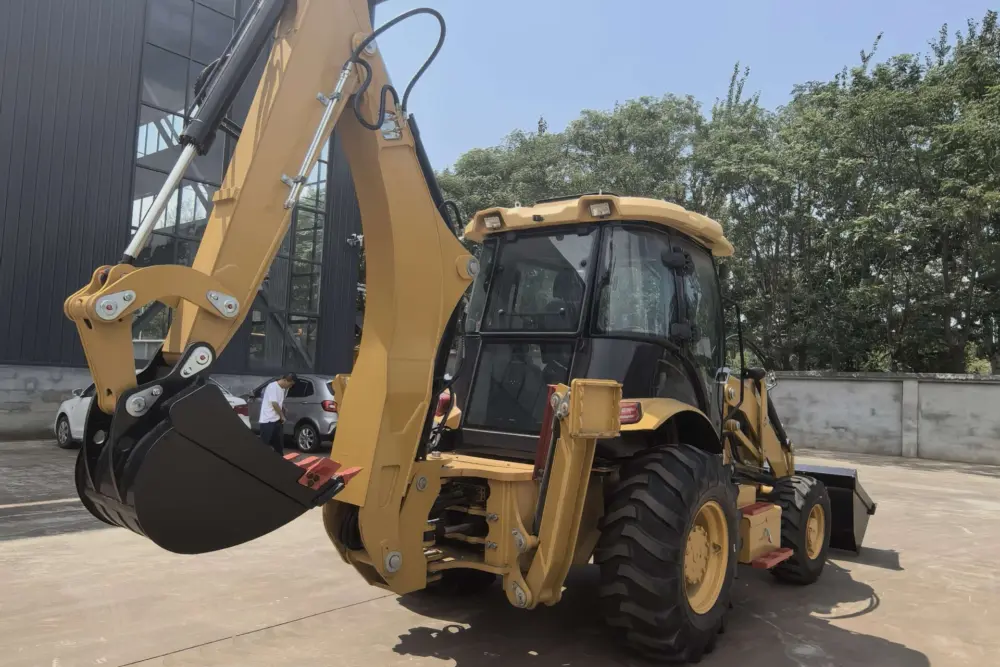
Evaluate the Loader End for Aggregate and Spoil
The RB420F and RB388 Standard list 1.5 m³ loader buckets and 2,800 kg rated loads. The RB388 Luxury lists a 1.2 m³ loader bucket and 2,500 kg rated load. These are nominal comparison values; material density and safe handling procedures still control the actual load.
Dumping height matters when loading trucks or placing material over a barrier. The listed figures are 2,700 mm for RB420F, 2,800 mm for RB388 Standard and 3,050 ± 50 mm for RB388 Luxury. Measure the receiving equipment and check the required clearance and reach, not just the vertical headline.
Check Route and Work-Zone Access
Machine dimensions
The RB420F is listed at 7,600 × 2,360 × 2,890 mm, while the RB388 Standard is 7,600 × 2,380 × 2,890 mm. The RB388 Luxury lists 6,400 ± 80 mm total length, 2,450 ± 20 mm overall width and 3,250 ± 10 mm cab height.
On a road project, check low bridges, overhead utilities, temporary works, narrow shoulders, gates and turning points. The measurement method used for the Luxury length differs from the combined format of the other two records, so confirm it for tight transport decisions.
Operating weight
Published operating weights are 7,500 kg for RB420F, 8,500 kg for RB388 Standard and 9,300 kg for RB388 Luxury. Compare these figures with bridges, ramps, transport equipment and working surfaces. No website specification can replace a route survey or ground assessment.
Understand Travel Specifications
The RB420F and RB388 Standard list maximum speeds of 30 km/h; the Luxury lists 32 km/h. These values do not establish safe road travel, legal registration or average movement speed. Local regulations, tyres, brakes, surface condition, load and the operating manual determine how the machine may travel.
If the machine will be transported rather than driven between sections, request final shipping dimensions and a packing plan. Do not assume a particular container or trailer method from the public dimensions alone.
Four-Wheel Drive Is a Feature, Not a Site Guarantee
All three Ray Bridge backhoe loaders are listed as four-wheel drive. That is relevant when comparing configurations, but it does not prove that a machine is suitable for mud, side slopes, loose shoulders or flooded ground. Tyres, weight distribution, operator practice and site controls also matter.
Ask for the exact tyre specification. The RB388 Luxury lists 16.9-28 tyres; comparable tyre details for the other quoted machines should be confirmed if they affect the project.
Plan the Dig-and-Load Sequence
A backhoe loader can place digging and loading functions on one chassis, but a productive and safe sequence depends on layout. Before mobilisation, map the excavation line, spoil area, aggregate stockpile, truck route and backfill sequence.
- Mark excavation and underground-service controls.
- Identify a stable working position and required stand-off.
- Confirm room for stabilisers and the backhoe swing.
- Keep the loader travel path separate from people where practicable.
- Place spoil so it does not overload the trench edge or block later work.
- Plan backfilling and material placement around the completed structure.
This is a planning framework, not an operating instruction. Use the machine manual, trained personnel and local safety requirements.
Compare Models for the Actual Constraints
Where RB420F may enter the shortlist
The 4,100 mm standard digging depth, 1.5 m³ loader bucket, 2,800 kg rated load and 7,500 kg operating weight may align with a roadwork specification. Its optional telescopic-arm figure is 5,000 mm.
Where RB388 Standard may enter the shortlist
It shares the 4,100 mm standard depth, 1.5 m³ loader bucket and 2,800 kg rated load, at a listed 8,500 kg operating weight. The optional telescopic depth is 5,300 mm. Resolve the engine and power data before purchase.
Where RB388 Luxury may enter the shortlist
Its listed 3,050 ± 50 mm dumping height and 85 kW rated power may be relevant, while the 1.2 m³ loader bucket, 2,500 kg rated load, 3,820 ± 20 mm digging depth and 9,300 kg operating weight must fit the project.
Confirm Attachments, Documents and Commercial Terms
Road projects can have destination-specific document, transport and configuration requirements. The current knowledge base does not support a universal certificate, warranty period, parts policy or delivery promise for every model. Ask for the applicable package in writing.
The quotation should show the exact model, engine, arm, buckets, tyres, cab options, dimensions, inspection evidence, required documents, warranty terms, spare-parts scope and delivery responsibility. If a fact is not yet available, keep it as TBD until the supplier provides evidence.
A Roadwork Enquiry Checklist
- Destination country and project location conditions
- Deepest and widest excavation
- Pipe, culvert or channel dimensions
- Loader material and receiving height
- Narrowest access width and lowest clearance
- Route and bridge weight restrictions
- Required arm and bucket options
- Expected transport method
- Required inspection and document set
- Written warranty, parts and assistance terms
Use this information with the Road Construction application page and the current backhoe loader specifications.
How to Review a Supplier Answer
A useful answer should connect each recommendation to a measurable requirement. “This model is popular” is not enough. Ask the supplier to show which published depth, bucket, weight or dimension addresses the task. If the answer depends on an option, the option should be named and priced. If it depends on a certificate, inspection or service term, request the order-specific evidence.
Keep the project requirement sheet beside the quotation during review. Mark every line as confirmed, not applicable or TBD. This simple discipline makes it harder for a generic sales description to replace the actual roadwork constraints.
Review the Plan After the First Site Section
Once work begins, compare the planned trench dimensions, loading sequence and route assumptions with observed conditions. This review may change bucket requirements, spoil placement or transport between sections. It does not change the machine’s documented specification; it improves how the project uses verified information.
Frequently Asked Questions
Can a backhoe loader dig culvert trenches?
A backhoe loader has a rear excavating arm, but suitability depends on the required trench depth, width, bucket, ground conditions and safe setup. Compare those requirements with the confirmed model specification.
Which backhoe loader has the deepest standard depth?
RB420F and RB388 Standard both list 4,100 mm standard maximum digging depth. RB388 Luxury lists 3,820 ± 20 mm.
Do I need a telescopic arm for drainage work?
Only if the required reach or depth exceeds the confirmed standard-arm envelope or the work method needs it. Include the option and its specification in the quotation.
Can the front bucket load road aggregate?
The front loader is intended for material handling, but actual material, density and safe load matter. Compare the listed bucket capacity, rated load and dumping geometry with the task.
Can a backhoe loader travel between roadwork sections?
The models have published maximum-speed values, but legal and safe travel depends on local rules, route conditions and configuration. Confirm the transport plan separately.
What should I send when requesting a roadwork quotation?
Send trench dimensions, material type, truck or hopper height, access limits, route restrictions, attachments, destination and required documents. This allows unresolved items to be identified before ordering.