
Product Comparisons
Drum Capacity vs Concrete Yield in Self-Loading Mixers
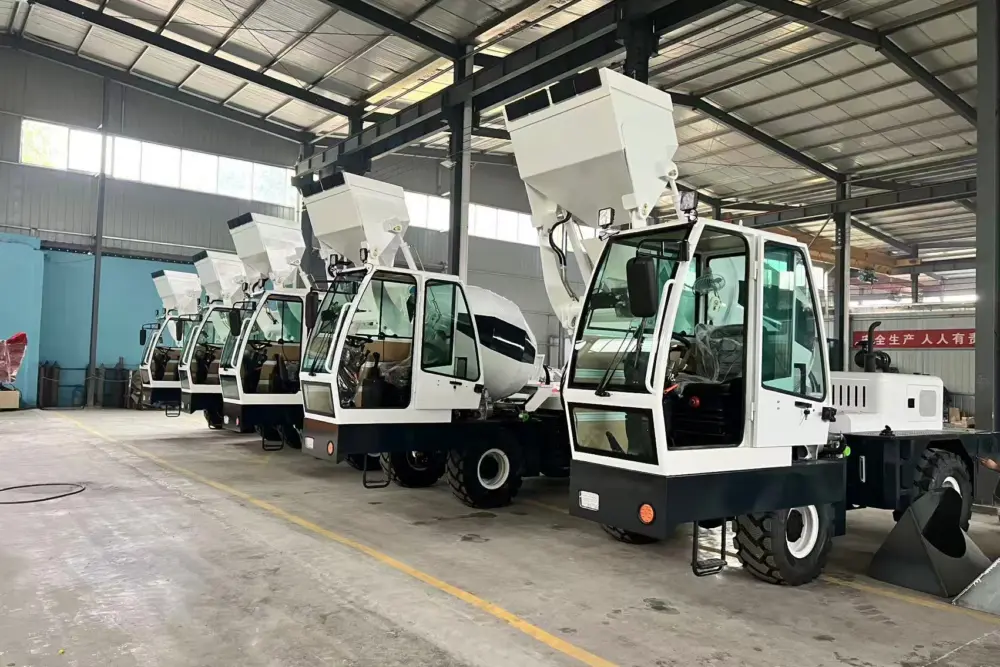
Drum capacity and concrete yield are often placed next to the same model name, which makes them look interchangeable. They are not. Drum capacity describes the geometric volume of the drum, while concrete yield describes the stated amount of concrete produced per batch. Confusing them can overstate output and distort project planning.
The distinction is especially important in the Ray Bridge range because RB1600 and RB2500 have both values documented, while RB4000 currently has a confirmed drum capacity but no confirmed yield.
What Is Drum Geometric Capacity?
Drum geometric capacity is a volume associated with the drum itself. It is not a promise that the entire geometric volume becomes discharged concrete. Space and movement are required for materials to mix, and the relationship between input materials and finished concrete is not established by the drum label alone.
Ray Bridge publishes the source terminology rather than converting it into a more attractive output figure:
- RB1600 drum geometric capacity: 2.5 m³
- RB2500 drum geometric capacity: 4.5 m³
- RB4000 drum capacity: 4 m³
What Is Concrete Yield per Batch?
Concrete yield per batch is the stated volume of concrete associated with one completed batch. For output planning, this is normally the more relevant capacity field, provided it is supported by reliable model documentation.
- RB1600 concrete yield: 1.6 m³ per batch
- RB2500 concrete yield: 2.5 m³ per batch
- RB4000 concrete yield: TBD
The RB4000 source does not state concrete yield. Therefore, 4 m³ must remain labelled as drum capacity. Calling it 4 m³ output would create an unsupported claim.
Why the Two Numbers Differ
A mixing drum needs working volume for the material to move through the mixing action. Geometric volume, ingredient loading and discharged yield describe different stages. The exact relationship depends on the machine design, batch inputs and operating procedure, so it should be taken from the model documentation rather than guessed from a ratio.
The documented relationships in this range also show why one assumed formula would be unreliable. RB1600 pairs a 2.5 m³ drum with 1.6 m³ yield; RB2500 pairs a 4.5 m³ drum with 2.5 m³ yield. Those two examples do not authorize a calculated RB4000 yield.
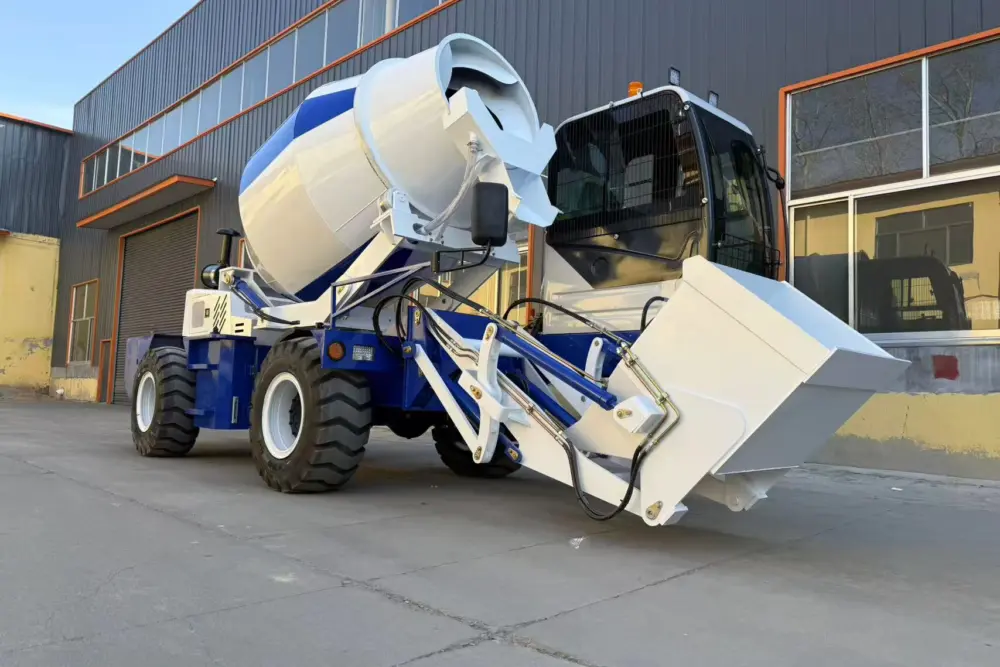
How Capacity Confusion Affects Procurement
It can overstate hourly output
If a buyer multiplies drum capacity by batches per hour, the result can exceed the supported production figure. Use confirmed yield in the calculation and keep cycle assumptions visible.
It can affect pour planning
Structures may require a defined placement volume and sequence. A batch-size assumption changes the number of cycles, material staging and timing. Confirmed yield is therefore a planning input, not just a marketing number.
It can create quotation disputes
If one document says “capacity” without defining the term, buyer and seller may interpret it differently. The quotation should say drum capacity or concrete yield explicitly, with units and source.
How to Estimate Hourly Output Correctly
The basic planning formula is:
Estimated hourly output = confirmed concrete yield per batch × realistic completed batches per hour.
RB1600 and RB2500 list up to four batches per hour. At that listed upper rate, the arithmetic gives 6.4 m³/h for RB1600 and 10 m³/h for RB2500. These are calculated ceilings from published values, not guaranteed site output.
Realistic cycle count depends on loading, water, material layout, mixing, travel, discharge, cleaning and interruptions. Measure or conservatively estimate the complete cycle for the actual site.
Why RB4000 Output Must Remain TBD
RB4000 has several confirmed facts: 4 m³ drum capacity, 19–21 rpm drum speed, 270° swing, 92 kW rated power, 8,300 kg operating weight and computer-controlled weighing. None of those facts independently provides concrete yield.
A larger power figure or a named drum capacity cannot substitute for missing yield evidence. Request an updated model specification that clearly defines output before using the value in a tender, project plan or advertisement.
Capacity Is Only One Selection Factor
A larger batch is useful only if the machine can reach the materials and pour. Compare operating dimensions and weight:
- RB1600: 6,750 × 2,350 × 2,450 mm; 5,200 kg
- RB2500: 6.8 × 2.3 × 2.9 m; 6,900 kg
- RB4000: 7,700 × 2,580 × 3,450 mm; 8,300 kg
Check route width, height, turning area, supporting surface and unloading plan. Do not select by cubic metres before checking whether the machine fits the site.
Discharge Geometry and Placement
RB2500 lists 270° discharge rotation. RB4000 lists 270° drum swing, chute swing of at least 60° and hydraulic chute-angle control. These features may matter where the machine must place concrete to the side, but a specification does not replace a site layout.
Ask where the machine can stand, what it must discharge into and whether another placement method is required. Confirm the supplied chute and controls.
Weighing Data Should Also Be Model-Specific
RB4000 explicitly lists a computer-controlled weighing system and C15, C20, C25 and C30 concrete-grade settings. The current controlled data does not apply the same statement to RB1600 or RB2500. Each quoted model should identify its included weighing and control equipment.
A weighing feature also does not guarantee concrete strength. Material properties, moisture, proportions, calibration, mixing and project quality controls remain relevant.
A Capacity Verification Checklist
- Ask whether “capacity” means drum volume, mixing capacity, discharge capacity or concrete yield.
- Require units and per-batch wording.
- Check the value against the exact model document.
- Keep optional and standard equipment separate.
- Calculate output from yield, not drum volume.
- Use a realistic full-cycle time.
- Check site access and discharge geometry.
- Write unresolved values as TBD.
How to Compare the Ray Bridge Range
RB1600
Use 1.6 m³ yield for batch planning and 2.5 m³ for the drum’s geometric capacity. The model lists up to four batches per hour, 58 kW power and 5,200 kg operating weight.
RB2500
Use 2.5 m³ yield and 4.5 m³ drum capacity. It also lists up to four batches per hour, 76 kW power, 6,900 kg weight and 270° discharge rotation.
RB4000
Use 4 m³ only as drum capacity. Yield is TBD. Compare its 8,300 kg weight, 92 kW power, dimensions, swing and weighing features without inventing output.
Questions to Put in the Quotation
Ask the seller to state concrete yield per batch, drum capacity, the definition of each value, included weighing system, expected test method, discharge equipment and the exact model configuration. If a production rate is provided, ask whether it is a listed maximum, a test result or an estimate for your site.
Review the current self-loading concrete mixer range and keep the capacity labels intact when copying data into a project worksheet.
How to Read Ambiguous Capacity Labels
If a brochure uses “mixing capacity,” ask whether it means geometric drum volume, nominal input, fresh concrete output or another manufacturer-defined value. Request the original table and the test or calculation basis. Never translate an ambiguous label directly into “yield” for SEO or sales content.
Also check whether a number is stated per batch, per hour or per day. A cubic-metre figure without a time or batch basis can be misread. Preserve “per batch” wherever yield is published.
Why a Universal Conversion Ratio Is Unsafe
It may be tempting to divide known yield by drum volume on RB1600 or RB2500 and apply the ratio to RB4000. That would be an inference about a different design and is not supported by its specification. Geometry, permitted fill, blade design and the manufacturer’s definition can differ.
The correct evidence is a model-specific document that explicitly states concrete yield. Until that exists, procurement worksheets and public pages should show TBD.
Capacity and Commercial Comparisons
Price per cubic metre, fuel use and labour savings cannot be calculated from capacity labels alone. They require local prices, actual cycle observations, staffing, material supply and operating records. Presenting a universal saving would turn an educational comparison into an unsupported promise.
How to Publish Capacity Data Responsibly
Use the full label every time a capacity appears in a title, table, image caption or FAQ. “1.6 m³ concrete yield per batch” is clear; “1.6 m³ capacity” is not. Apply the same wording across quotations and sales material.
If evidence changes, update the controlled product record first and record the source. Do not correct only one article while leaving conflicting figures elsewhere on the site.
Check Translations and Unit Labels
When a supplier document is translated, preserve the original capacity term beside the English label until its meaning is confirmed. Check decimal separators, cubic-metre symbols and per-batch wording. A translation should clarify the evidence, not silently turn an ambiguous drum value into output.
Frequently Asked Questions
Is mixer drum capacity the same as concrete output?
No. Drum capacity describes the drum volume. Concrete yield describes the stated finished concrete volume per batch.
Why is drum capacity larger than yield?
The drum needs working volume for mixing, and input, geometric and discharged volumes are different concepts. Use documented values rather than assuming a universal ratio.
What is the RB1600 concrete yield?
The confirmed yield is 1.6 m³ per batch. Its drum geometric capacity is 2.5 m³.
What is the RB2500 concrete yield?
The confirmed yield is 2.5 m³ per batch. Its drum geometric capacity is 4.5 m³.
Is the RB4000 a 4 m³ output mixer?
That is not supported by the current evidence. Four cubic metres is the confirmed drum capacity; concrete yield remains TBD.
Which capacity should I use for production planning?
Use confirmed concrete yield per batch and multiply it by a realistic completed cycle count. Keep all assumptions visible.